For Ana Cauchi, football was everything. But balancing elite sport with the pressures of deafness, discrimination and isolation slowly changed her relationship with the game she loved. This is the story of how one England player lost her place in football, and is fighting to find her way back.
Ana Cauchi’s first experience in football, like many girls of her generation, came in a local boys’ team, as there were no girls’ or deaf football teams near her.
“I was definitely nervous to be playing with the boys because they would not pass to me and I had to work extra hard to prove myself to not only them, but the coaches too,” Cauchi says.
“There was a stigma around girls playing football, but adding my deafness into the mix, I felt like my team mates and coaches did not trust me and they got frustrated with me for things like not hearing them call for the ball.”
Cauchi has profound bilateral sensorineural deafness, meaning she wears two hearing aids, but her hearing has progressively worsened. From an early age, Cauchi battled against stereotypes to play the game she loved, regardless of the opinions her coaches and teammates may have had.
A place to belong
The added pressure of feeling like she had to prove something because of her gender and disability could quite reasonably have put her off the sport entirely, but that all changed when she discovered disability football at Brighton & Hove Albion Football Club.
“It was probably the first time I felt included playing any sport, even though I was only one of two girls in that programme,” she says. “I felt much more comfortable being around other deaf people as well as partially sighted and cerebral palsy players.
“There was a mutual respect that you do not get in the mainstream game because we all had extra challenges, but it was really nice being able to adapt my game, and have other people adapt their game to help me.”
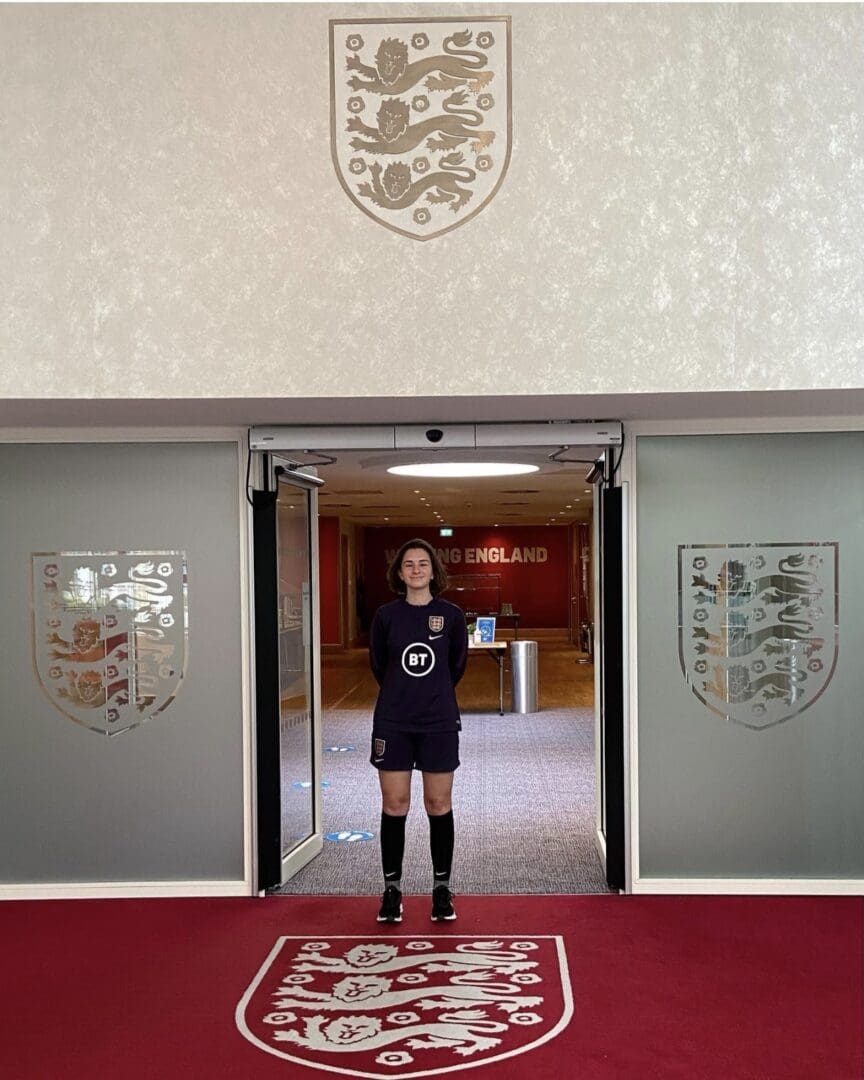
Through sessions at Brighton, Cauchi started her journey on the England talent pathway, something she says gave her ‘higher things to aim for’. After progressing through the regional and national centres on the pathway, a senior England squad call-up followed.
“When I finally got selected for England, I felt immensely proud,” she says. “I know everyone says that, but there is no feeling that comes close. It is like all your hard work finally starts to pay off, and the added pressure of proving people wrong makes it even more satisfying.”
England recognition, mainstream rejection
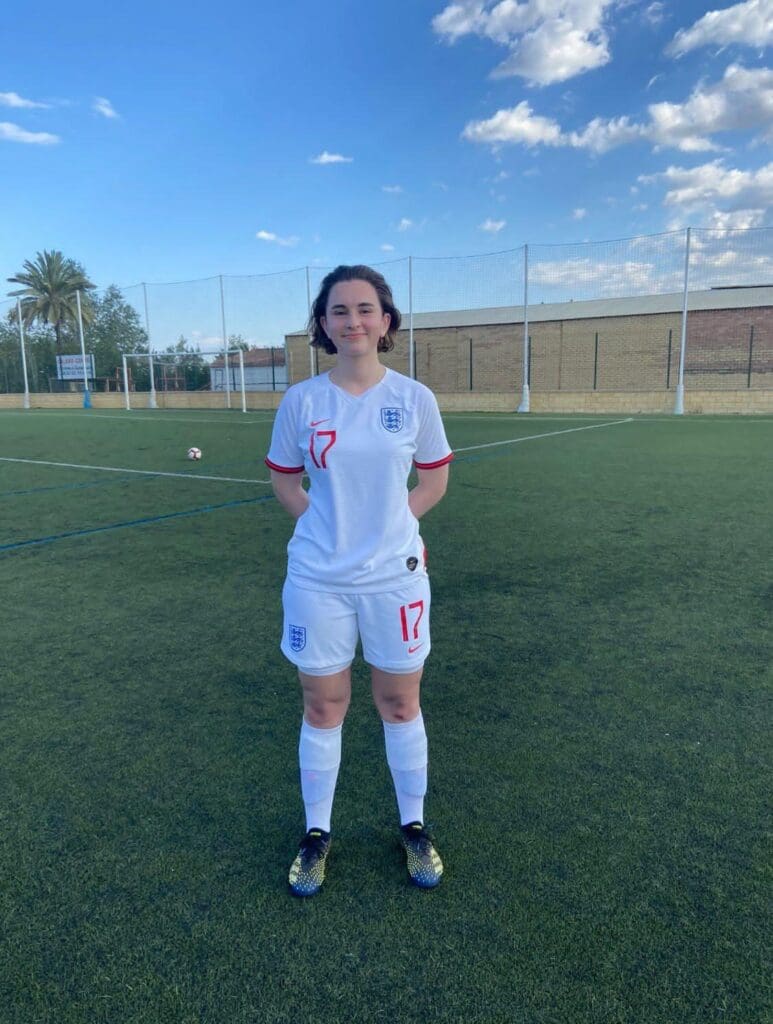
Cauchi grew in confidence camp by camp, with her favourite part of the month the email confirming she would attend the next one. However, while life as an England player should bring praise from those around you, Cauchi’s mainstream football experience took a turn.
“Playing mainstream football alongside playing for England was really difficult because even though I wanted to do it and I enjoyed it, I faced a lot of abuse from coaches and teammates, and even other player’s parents in the mainstream game,” Cauchi says.
“It got worse when coaches found out I was playing for England – maybe because they were jealous or they did not think I was good enough.. I am not really sure why, but it got thrown in my face a lot.”
Cauchi says teammates stopped passing to her and coaches repeatedly told her not to do things that her England coaches had taught her. Despite trying to draw on her earlier experiences of not being accepted at youth level, she still faced the same problems.
“From a sensory perspective, it was obviously really challenging to hear people call for the ball, hear coaches explaining drills, and even bonding with teammates.
“I think my deafness did make the social side of things difficult as well, as I wasn’t really able to gel with teammates.”
Despite the challenges she faced in the mainstream game, Cauchi still held onto her love of football through the national team.
“I think I did start to lose enjoyment for mainstream football, but I think wearing the England kit helped motivate me outside of camps to keep up with my fitness and keep playing,” she says.
Losing more than football
As mentioned earlier, athletes have so many plates to spin, and Cauchi was struggling with the travel demands of her career. She was constantly commuting from training camps back to university in Bath, where she balanced her education alongside being an elite athlete.
“I was having a really tough year mentally, but I did not have the support I needed and I was still at uni, so I felt really alone.”
Cauchi eventually stopped being selected for England training camps and, after a re-trial, was not selected again.
“I felt like I had lost my deaf community because, before getting involved with the England pathway, I had never really met another deaf person.
“I still have a lot of regret because I made some bad choices and just gave up on football and lost a lot of friends from the team.”
Cauchi says she is desperate to get involved in football again, but admits it is a bit too painful to get back into it. “I had one bad year and it all went downhill,” she says.
With so many things to balance as an international athlete, it is understandable why stories like Cauchi’s exist.
Finding a way back
However, despite the challenges she has faced, it does not mean her journey in sport has ended.
She now goes to the gym and plays cricket to help her ‘mourn’ the loss of football. It helps her maintain her competitive drive and replicate achieving her football goals.
Although Cauchi has been on a journey no athlete should have to endure, she still says: “I do want to join a mainstream futsal team again because I do really miss it, and I feel like I worked so hard for so long and now it is all gone to waste.”
It is a reminder that, despite everything she has experienced, Cauchi is still determined to prove her doubters wrong.