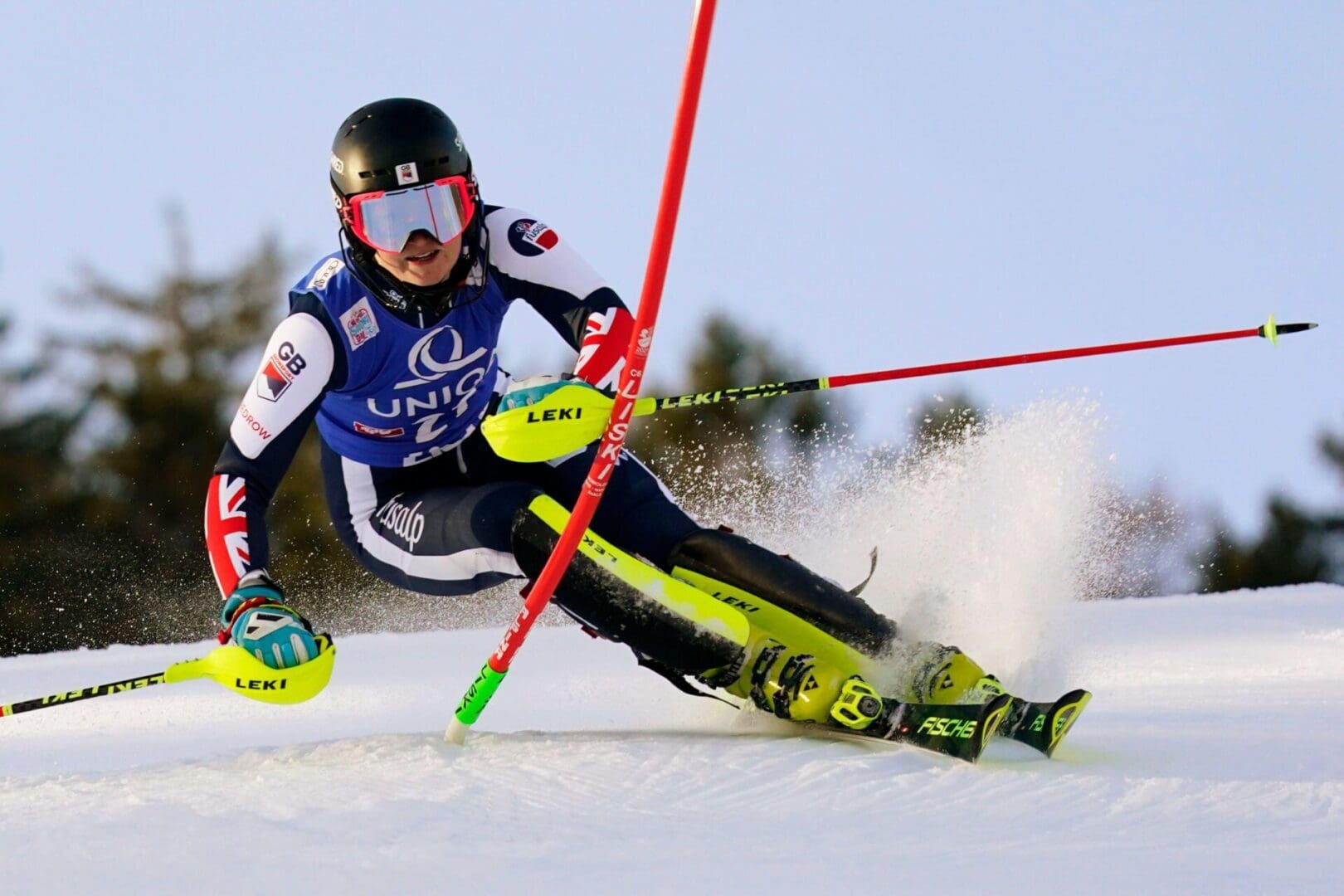
In elite sport, returning quickly from injury is often expected rather than questioned. Retired Olympic alpine skier Charlie Guest reflects on a career shaped by rapid comebacks, hidden complications and the long-term consequences of returning to competition before she was fully ready.
“I struggled with injuries quite a lot throughout my career,” says Charlie Guest, a two-time Olympic alpine skier.
Her career was shaped as much by recovery as it was by performance.
“I broke four vertebrae when I was 20. Just 11 weeks out from my first ever Senior World Championships,” she says.
Although the initial physical recovery was relatively quick, there was underlying damage that went unnoticed.
“For the next five years or so I really struggled with ongoing pain cycles, and that obviously had quite an impact on me mentally as well.
“But I was an athlete that thought if I just trained harder and trained more, I got better, and I never understood how athletes could take a year out and come back because you’re missing so much time in comparison to everyone else.
“I didn’t need surgery and quite quickly I was actually able to get back doing a lot of things because the bones healed so quickly. That felt really great,” Guest says.
But in hindsight, she says the return came far too soon.
“Looking back now, I should have taken the rest of the season off.
“I injured myself at the end of November and I was back skiing in early January, and looking back now, that’s ridiculous.
“At the time, I felt good to go back. Medically I had been cleared and I actually made some really good race results.”
She went on to compete at the World Championships in February, but the consequences followed.
“After that, I ended up with so many more complex problems as a result – disc issues, nerve issues, ongoing pain cycles.
“If I’d just taken the rest of that season to properly rehab, I would have had the whole summer to get back on skis and there would have been absolutely no drama,” she says.
Instead, the pattern repeated itself.
“I was young with the mindset of ‘do more’ and get back to it.
“Everyone around me was pretty keen for me to get back on the snow, almost patting themselves on the back for how quickly I’d recovered and got back to skiing.”
But the long-term impact was clear.
“I’d build back up to a really good place and then just break down again.”
Guest describes a growing disconnect between her identity as an athlete and what her body was able to do.
“Being a female ski racer brings strength, power and resilience – feeling like I can get through anything.
“But I felt like my body and who I wanted to be were two separate things.
“I couldn’t back squat, I couldn’t lift like others, I couldn’t run properly, going on the bike hurt.
“It felt like I was always making compromises and I was always made to feel like I was the weak one.”
She also reflects on the environment around her at the time.
“I would say the coaching space I was in wasn’t greatly supportive. There were only two of us athletes – one who could do stuff, and then me,” Guest says.
“I always felt like the lesser, sort of irritating person that was there because there had to be exceptions made because I couldn’t do what the other was doing.
“By 2018 I was just done.
“My personal life was a mess, the coaching situation was really bad, and I remember thinking: what am I doing to myself?
“I just went home. Literally left my ski gear there and went to rehab in London.”
It was there that her perspective began to shift.
“The physio said, ‘We’re not even going to talk about your back today.’
“She asked how I was sleeping, how I was eating, how my personal life was – and I just burst into tears.
“Physically she said I was actually fine, but what I had was more of a nervous system and mental thing. That was the turning point.
“Within about two weeks I was back lifting and doing hard sessions. I remember thinking, ‘Oh my God, I can actually do something.’
“For so long it felt like I couldn’t, and I was being told that as well.”
For Guest, the biggest change came from her environment, not just her training plan.
“Once I was in an environment where I felt safe, everything changed. It’s not just physical, it’s everything around you.”
Guest’s experience highlights a growing tension in elite sport: the pressure to return quickly, and the long-term cost when athletes do.