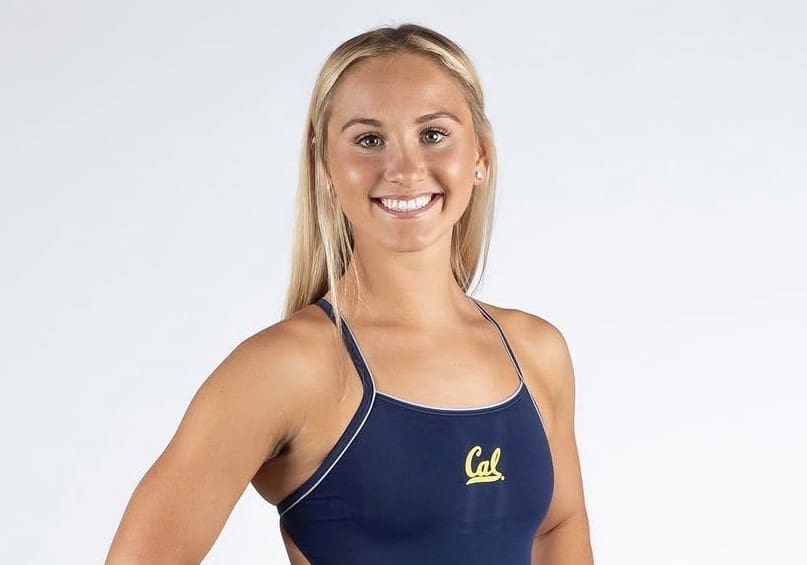
Cassidy Bayer was once considered one of the fastest swimmers in America, on track for the Olympics. But behind the medals and record-breaking times, she was facing a private battle. After struggling with disordered eating, Bayer now advocates for greater awareness and support for athletes facing similar challenges.
Cassidy Bayer showcased her natural talent at just three years old in Northern Virginia, where she would swim lengths of her neighbourhood pool. Even then, it was clear she had the potential to be a force to be reckoned with in the swimming world.
“I started on the summer league team at four and by the time I was eight I was swimming with Nation’s Capital Swim Club. I was pretty good,” Bayer says. “Then by the age of 14, I was the youngest on the US National Team, and I remained on that team for seven years.”
During her teens she trained with top athletes such as Katie Ledecky, Missy Franklin, and Natalie Coughlin. Being surrounded by Olympic medallists set her on a path to strive for the Games at a young age.
“Discipline was huge in everything we did as swimmers. Swimming twice a day or even working out twice a day is not what we want to do. It’s not really enjoyable. But the discipline it took fed into everything,” says Bayer.
“It fed into sleep, food, social life, just everything. I remember times when I was younger and wanted to sleep over at a friend’s house, but I couldn’t because I had practice the next day.
“I was missing out on all of those other kinds of preteen experiences by having to be so mature and disciplined at such a young age.”
The weight of gold
This strict regimented lifestyle fed into all aspects of her upbringing. It surrounded her at all times.
“My childhood room was like memorabilia city. I went to bed every night thinking about the Olympics. I looked to my right and all my times were broken down; I had pages of data on my walls. It was kind of obsessive,” Bayer says.
“I had my breakout meet when I was 13 years old at Nationals, and I won the 100m butterfly finals. Dana Vollmer (a five time olympic gold medalist) ended up giving me her medal!
“It was a huge thing because I broke her national record, so my dad and brother made me a poster, and that stayed on my wall when I went to bed.”
“There were constant reminders that made me think I want to be an Olympian. I was undefeated for 10 years in my age group,” she says.
At breaking point
Bayer competed in the US Olympic trials at just 16 years old. She was the fourth-fastest American woman in the 200m butterfly at the time. The odds were in her favour, but despite placing third and fourth in her events, she narrowly missed out on making the Rio 2016 Olympic team.
That moment marked a shift in her mental health. “I remember very clearly thinking to myself, ‘I’ve been swimming the best I have in practice. I was getting really good sleep. What am I missing?’ I need to fixate on what I’m putting into my body, and it just went downhill from there.”
Bayer continued to train despite her Olympic setback, but she was now under extreme self-imposed dietary pressure. She swam throughout her time at the University of California, Berkeley, but behind closed doors, her health was taking a toll.
“I was packing to go back to college during the summer of my sophomore year and I was at home. I was fighting to wake up. I was deteriorating. I had no energy and my parents had no idea what it was,” Bayer says.
“They said, ‘do you really want to make the Olympics?’ trying to shock me out of it. I looked at them with sincere rage. I was trying so hard. It escalated so quickly that I couldn’t even tell, but I knew at this point it was a problem. I just had to admit it.”
Pulled from the water
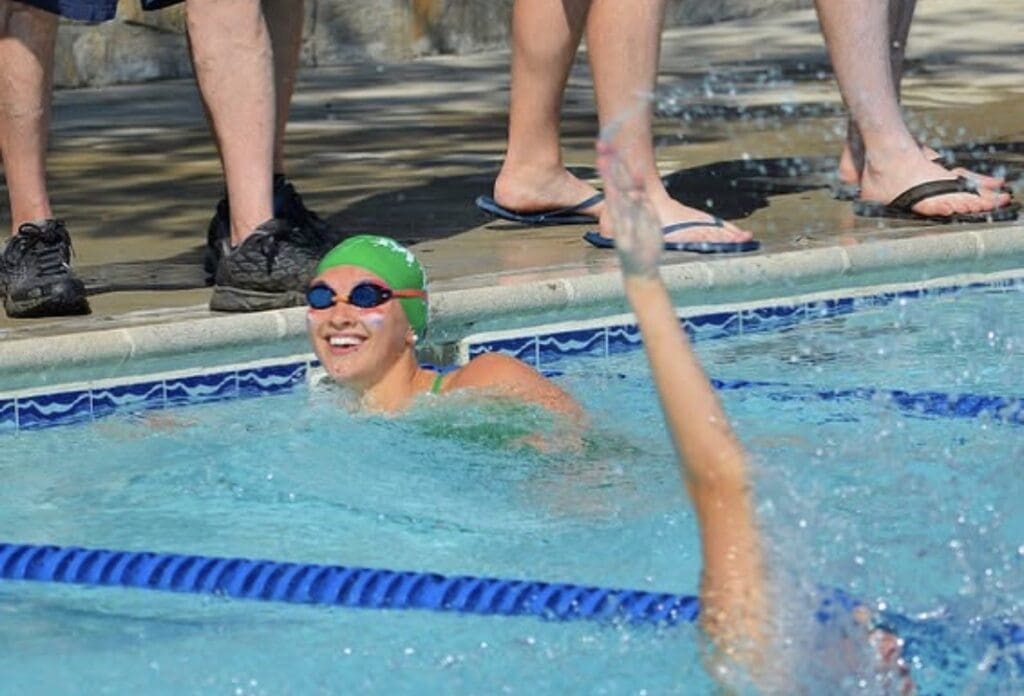
The realisation came in the pool. “Back at college I was on target to get an NCAA (National Collegiate Athletic Association) record in the 200m fly. I hit the 150 mark, but in the last 50 metres I started to go numb and had to get pulled out of the water.
“My body gave out in the middle of the race because I was so malnourished,” she says.
“But it’s never just the eating disorder, it’s always a bunch of stresses. And my coach didn’t really help either.”
Bayer’s coach at the time was Teri McKeever who was the first woman to serve as head coach of a US Women’s Olympic swim team.
But was dismissed from UC Berkeley due to an investigation into a hostile team environment she created.
“Teri, my coach at the time, said, ‘you haven’t been good to yourself’. That’s when I finally was like, I can’t do this. I can’t even swim.”
Bayer entered a program for athletes with eating disorders in St. Louis, Missouri. After her initial release, the Covid-19 pandemic triggered a relapse.
“I was in treatment twice. It wasn’t until I hit rock bottom that I realised I’m the only one who can do this for myself.
“The importance of nutrition is something eating disorder treatment scared back into me. It was honestly crazy to see how much I was wasting potential. It could have been avoidable if I just had the tools prior to addiction. When I was 14, no one talked about this,” says Bayer.
The scale of the struggle
Statistics show just how widespread the issue remains.
The National Eating Disorder Association states that eating disorders are said to be higher in athletes than non-athletes, but there has been further research to suggest aquatic athletes are even more at risk due to the unique performance and aesthetic pressures. Research for Mass General Brigham by psychologist Kendra Becker says 42% of female athletes are affected by disordered eating, and up to 70% of female athletes may engage in behaviors that can lead to an eating disorder.
Accredited sports dietitian Conrad Goodhew works to tackle this issue throughout his work with young athletes. “So many athletes end up creating disordered behavior because they want to perform really well,” he says. “It’s not something that just happens with athletes that are currently in the sport; it actually lives with them forever.
“We’ve got ex-athletes becoming coaches, so it’s a generational cycle.
“There’s heaps of stuff online around body image and language, and swimmers are exposed to the pressure naturally based on what they have to wear in their sport,” Goodhew says.
“I tell coaches they must give the athletes breaks because in swimming you don’t have the luxury of eating underwater. So sessions need to be structured to ensure our athletes are consuming huge amounts of carbohydrates, not just for the physical components, but for the mental components and then they can actually learn those healthy patterns.”
Nutrition is often treated as the responsibility of the athlete, but for those like Cassidy Bayer who began competing so young, trying to prioritise the right food to adequately fuel for their respective sports can quickly become an overwhelming task.
“People often forget young athletes possibly don’t know how to cook, don’t know how to look after themselves, or don’t know how to grocery shop,” says Goodhew.
“In the sport nutrition world, everything is driven by supplement companies, but most of the time athletes are not using them correctly.”
A new chapter
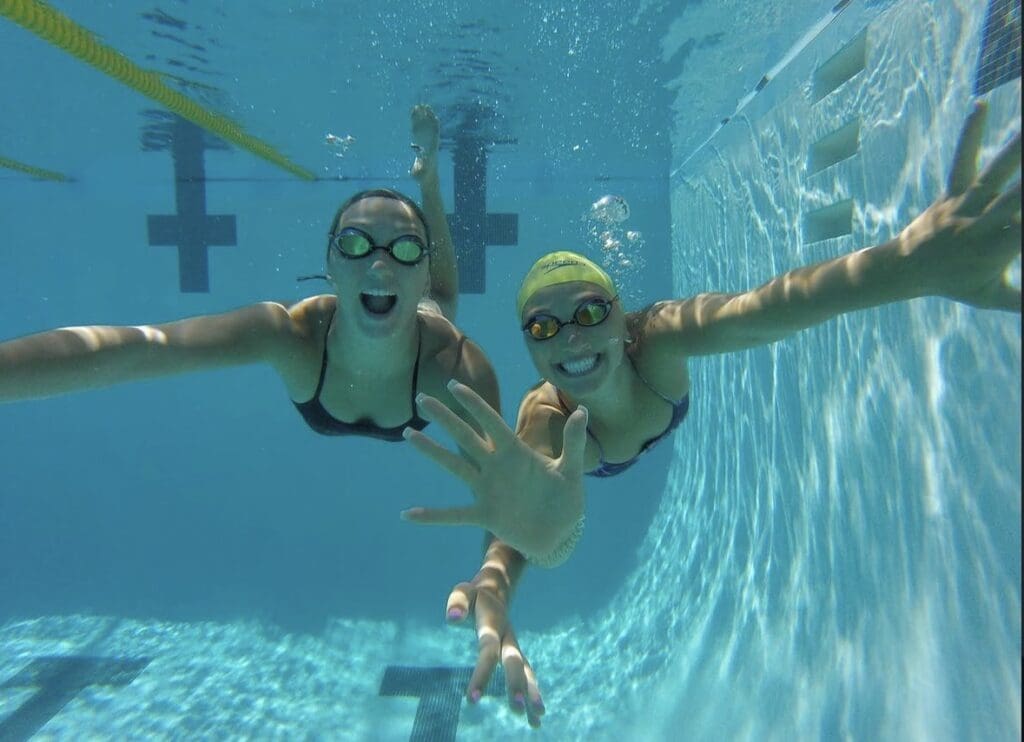
Early intervention and better education are key to ensuring athletes don’t suffer in silence. For Cassidy Bayer stepping away from swimming in 2020 was not the end. Now 26, she has slowly returned to the water, swimming for U.S. Masters (a national nonprofit organization supporting adult swimmers). This all comes after she transferred university and graduated from Tennessee in 2023, starting a new career path in journalism.
“I’ve really been finding my love for it again and thinking about possibly getting into coaching. I would’ve given anything to have had a coach who had actually navigated an eating disorder and successfully went through treatment,” she says.
“It’s a mental battle but it has gotten way easier and more manageable. It’s added more direction to my life and taught me a lot of life lessons along the way.”
Recovery is rarely linear, but Bayer’s journey highlights a vital truth: not all sporting injuries are physical, but that doesn’t make them any less real. Nutrition for athletes is a crucial part of their training and recovery but for a large number of them, it’s the very thing they need to heal from.