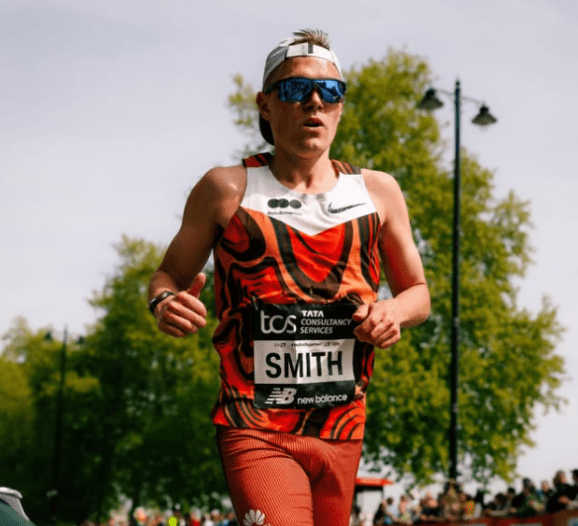
Professional runner for Nike, Jake Smith, speaks about RED-S, stress fractures and the emotional isolation of competing in an individual sport, revealing how injury nearly pushed him away from running entirely.
Professional runner Jake Smith spends most days alone.
“I literally don’t have the most exciting life,” he laughs. “I just wake up, run, eat, nap and just keep repeating that.”
For elite runners like Smith, solitude and running often go hand in hand. Long miles, isolated sessions and self-discipline are built into the sport. But when injury enters the picture, that solitude can quickly become something darker.
Over the past several years, Smith has battled with RED-S (Relative Energy Deficiency in Sport); a syndrome where the body does not consume enough energy (calories) to support both daily functions and exercise. As well as multiple stress fractures and weight loss, all nearly ending his career before it had properly begun.
“I saw a correlation with weight loss and my times getting quicker,” he says. “Then it just got to a point where I’d get to a race and get ill straight after.”
What began as performance discipline gradually became something more dangerous.
“I basically associated being light with running quickly,” Smith says. “But then I got all these injuries.”
“When I signed with Nike and started with the team, they sent me to Uganda to do some training and I dropped a lot of weight.
“My testosterone was below what women had to be, it was that low.
“I had a DEXAS scan and all my bone health was extremely low as well.
“They said I wouldn’t be running at the age of 30 if I kept up what I was doing. That was a tough time.”
Soon, Smith’s body began breaking down completely.
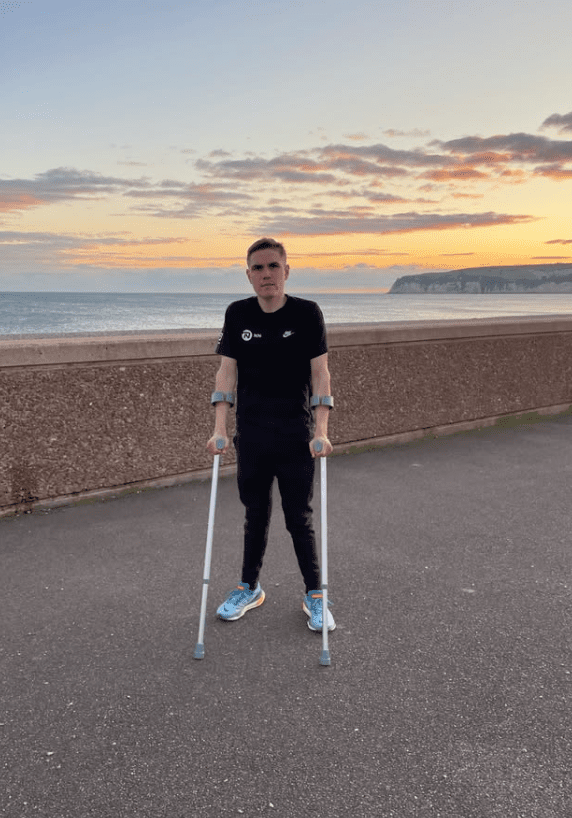
First came stress fractures in his foot. Then, in early 2023, a sacral stress fracture – a hairline crack at the base of the spine – left him unable to move without pain.
“A sacrum stress fracture is so much worse. You sit down and it hurts,” he says. “You stand up and it hurts. You lie down and it hurts.
“Physically I was broken. Mentally, I was even worse because I thought I would never get back to the sport again.”
The psychological side of RED-S became just as destructive as the physical symptoms.
The injury forced Smith to move back home while the life he had built around running disappeared.
“I got rid of social media for a week or two because I didn’t want to see anything to do with running,” he says. “I got to a point where I thought I couldn’t get back to the levels I was once at.”
“I didn’t watch anything. I still supported my mates because it meant a lot to them, but I just didn’t want anything to do with running.”
Smith reveals he developed disordered eating habits, something he has struggled with, during the worst periods of his career, driven by fear that weight would cost his performance.
Now healthier and injury-free, he hopes being open about RED-S can help other athletes avoid the same spiral he experienced.
“For me, I’m doing it for every other girl, boy, younger person, or person who has struggled with RED-S or who struggles with any of the similar processes I went through, and showing them even if you go through a hard stage you can come back stronger.”
“I don’t think RED-S is spoken about enough,” he says. “I want to be that guy who changes the sport. I know every other person hasn’t done it, but I reckon I can.”
After spending years simply trying to get back to the start line, Smith now feels closer than ever to returning to his best.
“I haven’t had an injury for years and I am the happiest I have ever been. I just hope it is spoken about more.”
When recovering from injury though, Smith says one of the hardest parts of individual sport is the absence of a consistent team environment.
“Yes,” he says when asked whether individual athletes become harsher on themselves. “95% of the time I’m by myself doing a session and it’s hard to tell really how you feel about your training.
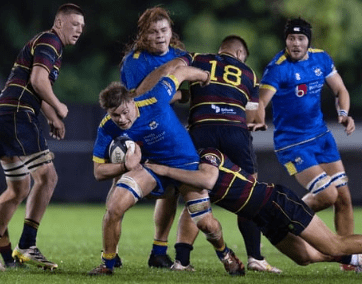
“It is hard when I get to the track and see the rugby boys chilling out together and I am just doing laps and laps by myself which can be quite emotionally challenging.”
Even while enjoying the independence running gives him, Smith admits there is a difference between solitude and loneliness.
“It comes to a point where there is loneliness,” he says. “If I do a whole week training by myself, that’s when I start thinking, ‘This is a bit rubbish.’”
For Smith, recovery only became manageable once a support network was built around him.
“They basically had to create a team around me,” he says, referring to the coach, psychologist, nutritionist and doctor who guided his rehabilitation.
Why do individual athletes often feel more isolated during injury?
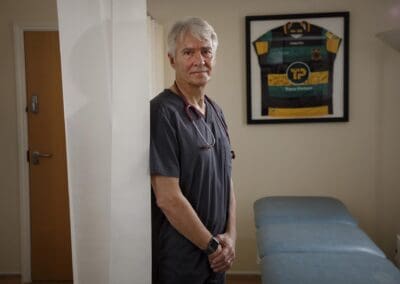
According to sports psychologist Andrew Lane, injury recovery can feel especially isolating because athletes lose far more than just physical fitness.
“Injury recovery can feel isolating because athletes lose access to the normal rhythm of sport,” Lane says. “Training gives structure, purpose, feedback, social contact and a sense of progress.”
For athletes in individual sports, that loss can feel particularly personal.
“In individual sports, injury can feel more private and personally threatening,” he says. “The athlete’s body, training, ranking, progress and identity may all feel closely connected.”
Without teammates around daily, many runners and endurance athletes also lose the social routine that training normally provides.
“When they cannot train, they may lose not only exercise but also the main organising feature of their day.”
While team sport environments can still present emotional challenges during injury, Lane believes the built-in support systems often help athletes feel less disconnected.
“If the athlete is involved in team meetings, conversations, routines and informal social contact, then being around the group can protect wellbeing,” he says.
Ultimately, Lane believes recovery should never be viewed as purely physical.
“The body is injured,” he says, “but the athlete’s relationship with sport is also disrupted.”