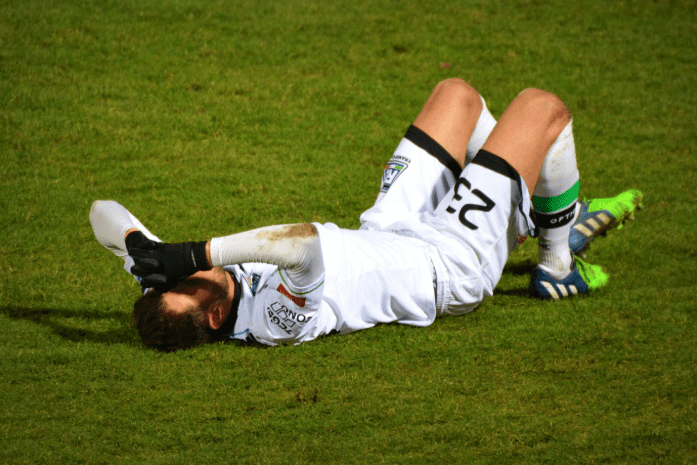
Sport often becomes more than the competition for elite athletes. It shapes routine, relationships, purpose and identity. But when injury or forced retirement suddenly removes that structure, many athletes are left emotionally unprepared for what comes next. Katie Howard sat down with Damien Stewart, sport and exercise psychologist, explaining why injury and retirement can feel something similar to grief.
Why do so many athletes struggle when their career ends, particularly through injury?
“I think it’s because everything, particularly at the highest levels, gets tied up in their identity. Everything else gets put on hold for my athletic career, particularly if it is professional and it makes money.
“The boyfriend, the girlfriend, the family, the TV shows, they’ve all got to wait until the game’s finished. So I think when it’s taken away, that creates an enormous hole in a person’s life.
“Even if it is temporary, like when I played and I broke both my wrists at once, you’re there on the bench trying to support everyone. You want to be part of it, but you’re not really a part of it anymore. There is a sense of ‘I’m not doing something meaningful in my life right now.’”
When retirement is forced rather than chosen, what emotional responses do you typically see athletes go through?
“Greif. I think grief is something that lasts the longest.
“You see grief, anger, dismay, disappointment, frustration, and that can either be directed at the situation or targeted at someone who caused it. The coach, the team, the media, whatever it happens to be.
“I think the one that stays the longest is grief. I’ve been thinking about it over the last 12 to 18 months, just how much grief comes into the therapy room without being acknowledged. You hear things like, ‘I feel down but I don’t know why,’ or you hear them lamenting the end of a career or an injury, but they’re not tapping into the fact that this is the same as a death in the family.
“That sounds dramatic, but it can feel that bad. This is an ending. The end of things that were meaningful can leave a massive hole in our life.”
What do people tend to overlook with injury?
“People kind of see it as an end or a full stop, rather than a process that has to be gone through.
“I talk to a lot of athletes about the fact that rest gets prescribed and to them, rest is not acceptable because that’s not what an athlete does. Yet rest is an active process towards rehabilitation.
“People don’t ask to be injured. They don’t ask to break a bone or pull a hamstring. But the problem is the denial of the situation – fighting something that can’t be changed instead of accepting it as it is.
“It’s saying: ‘I am injured. I can’t play. I can’t contribute. So how do I negotiate this period of time until I’m able to come back?’
“It’s the fighting of something that can’t be changed that tends to cause a lot of emotional grievance.”
How can athletes better prepare for retirement or transition away from sport?
“We should be building multiple identities throughout an athletic career.
“The athlete identity will always be the most front and centre while someone is competing, but what if we were also developing other avenues at the same time? What if we’re studying, building businesses, developing qualifications or planning financially for the future?
“If we’re doing athlete retirement properly, we’re starting from the beginning of their career, not the end of it.
“The word ‘transition’ implies a period of time rather than ‘today I was and tomorrow I’m not.’ That’s when people really struggle – when retirement becomes sudden and not planned for.
“I always come back to this phrase: don’t retire from something, retire to something.”
As conversations around athlete wellbeing continue to grow, Stewart believes transition and retirement should become part of the conversation far earlier, not simply once a career has come to an end.