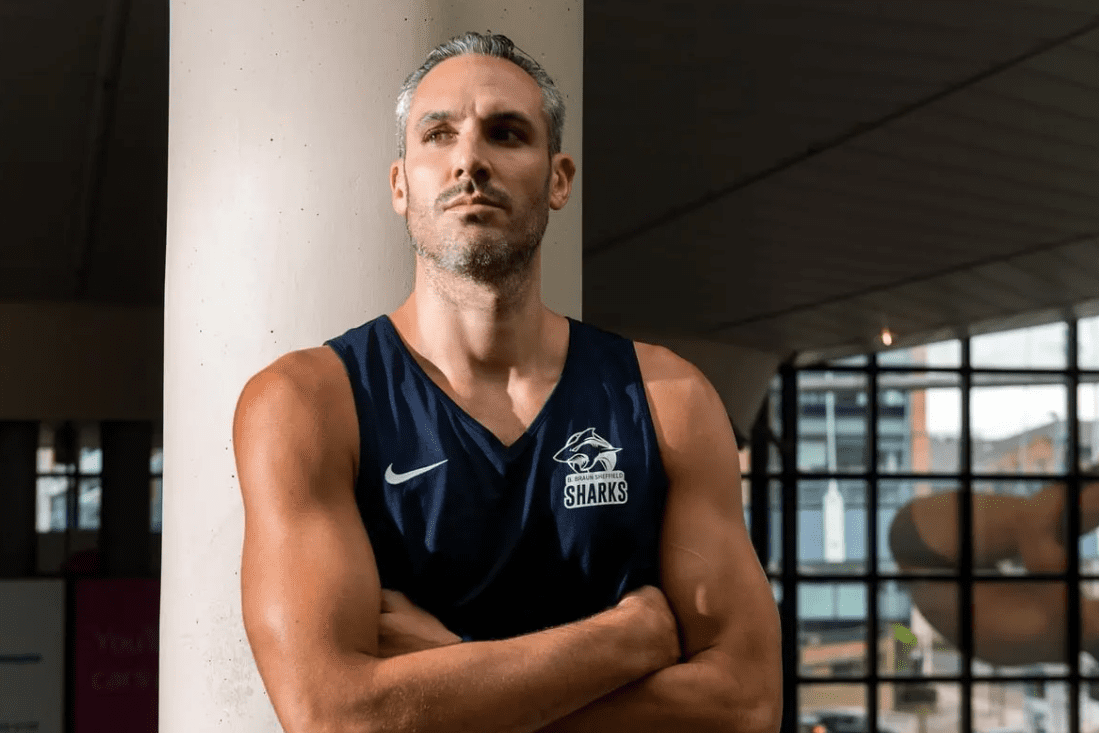
Mike Tuck is the highest point scorer in Sheffield Sharks’ history and the undisputed face of the club. His journey to 500 games wasn’t smooth sailing, though. Following a struggle to adapt to life in Europe and injuries that proved to be career threatening, Tuck explores the harsh reality of having to adapt and overcome time and time again.
The roar of the O2 crowd was still ringing in Mike Tuck’s ears when he met the eerie silence of a hospital ward. Just months after being crowned MVP in the 2016 British Basketball League (BBL) Championship Final, Tuck found himself listening to the beeps of his heart rate rather than the buzzer sounding out.
What was originally planned as keyhole surgery to clear calcium build-up in his toe, quickly became something far more serious.
“They had to open up an inch-wide cut because they had never taken that much bone out of a joint before,” Tuck says.
For a man who had built a career on being a reliable engine, this was a brutal reality check.
The injury to Tuck’s foot had an immense knock-on effect physically. “I would get to a good place, have a good week of training, and then the following week I’d get that pain in my hip flexor again,” he says.
Favouring his injured foot triggered further hip issues, and for the first time in his eight years with the Sharks, the captain wasn’t leading from the front, but from the side of the court.
Early days
Long before his time with Sheffield Sharks, Tuck was just another hungry prospect in the ruthless world of US college basketball.
He was at top form when he suffered his first major setback: a tendon tear in his right ankle. All of a sudden, the surging momentum came to a halt. Tuck felt that it had ‘derailed the season,’ and an eight week stint on the sidelines felt like an eternity.
For a young athlete with his eyes set on going pro, an injury isn’t just physical, it freezes time. While his teammates were slamming dunks, Tuck found he was spending more time with the physio and struggling to adapt to campus life in a walking boot.
“It really shook things up for me mentally,” he says. “I was a lot younger then, so I wasn’t capable of dealing with it. It was tough.”
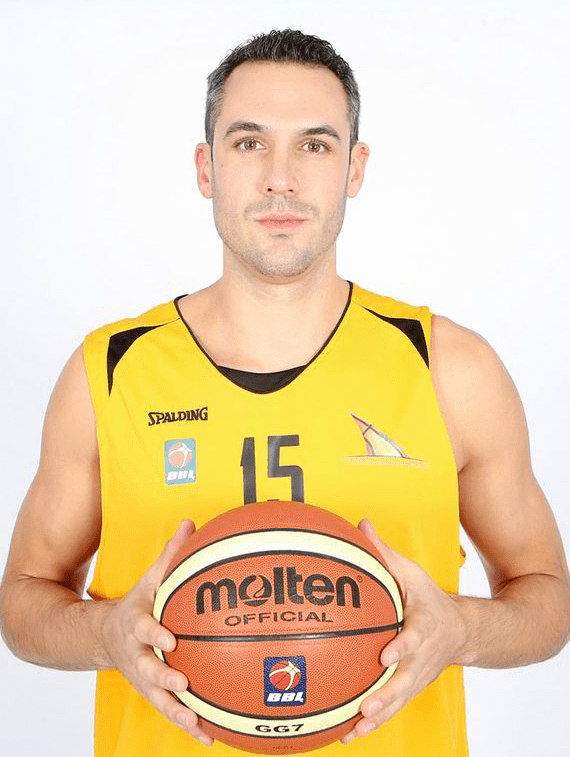
It was a period defined by his competitive drive. Without the outlet of basketball, Tuck confesses there were moments where he failed to take the situation seriously, a common theme amongst young athletes.
Watching from the sidelines was an exercise in patience, but it allowed his resilience to grow, which proved to be something he would later rely on. This was his first experience of ‘loneliness’ during the recovery process, which many athletes describe to be the hardest part of an injury.
Across the pond
After the bubble of college life burst, Tuck entered the unforgiving world of European basketball.
“A lot of guys get slapped in the face when they go to play overseas,” he says. “When you come from college level in the US or Canada, a lot of things are taken care of while you’re there; you get all the gear.
“Then at my first club in Cyprus I got a t-shirt and tracksuit, no shoes, even though it was in my contract.”
“Some college basketball teams are at a much higher level than most European pro leagues. Just because you are professional, it doesn’t mean the team you are playing for are going to be acting as professionally,” Tuck says.
He refers to himself as a ‘hired assassin’ or ‘contract killer’ during this chapter of his career in Cyprus and France.
“It gets to the point where you start playing for stats. When the season is almost over, you start wondering if you’ve done enough to earn another contract. I need more game time, I need to get my stats up.”
It was the constant pressure to impress and earn the next contract which led to selfish gameplay that blurred the lines between individual drive and team success. On one-year deals, a bad game felt like a step towards unemployment.
This anxiety was only fueled by isolation off the court. Tuck recalls being ‘lonely as hell,’ living in small, quiet towns where English was rarely spoken. This made it difficult to make new friends, which was important to him, as he didn’t have the comfort of his partner to soften the blow.
The beginning of Sheffield Sharks
The breaking point came in France when he was shown the door for the second time in his career.
“That was a huge wake up call for me,” he says. “I was definitely thinking, ‘Am I good enough? Should I be doing this?’”
The ‘hired assassin’ was left without a target. However, a call from Sheffield Sharks changed his life forever.
The transition from ‘contract killer’ to club legend didn’t happen overnight, but the process began the moment Tuck stepped out on court as a Sheffield Shark.
In the volatile world of European basketball, Sheffield offered stability. After a strong initial impression, Tuck signed his first multi-year deal, a move that fundamentally changed his course as a player.
“I didn’t have to worry about my stats in the same way,” he says. “I could play more loose, play more for the team. It was pretty rare in British basketball at the time, and they’d invested in me, so I wanted to invest in them.”
Now, he was free from the pressure of playing for his next paycheck, and Tuck’s value was finally getting noticed. He wasn’t just a player anymore, he was a pillar of the team. Tuck himself refers to the club as his ‘family that shaped him into the man he is today.’ This sense of belonging allowed him to divert away from the ‘selfish’ basketball he played in Europe, which was replaced by great loyalty to the Sheffield community.
Acceptance
In professional sport, athletes recognise that their prime has an expiry date. For Tuck, that realisation stemmed from the failure of a joint. Following toe surgery in 2017, the return to the court was far from smooth.
“My foot was just not feeling great,” Tuck says. “I struggled that entire year because I wasn’t the same player I was before.”
The injury created a devastating domino effect. The pain in his foot was so intense that Tuck’s body began to subconsciously compensate itself. He began to favour his other leg when jumping and landing. This imbalance triggered long lasting hip issues that haunted his daily life.
“I’d gone from winning MVP in 2016 to the next season where I just didn’t have it like I used to,” he says. It wasn’t just the physical pain, it was the ego hit of being an aging player in a young man’s game.
“I wasn’t as confident at the end of my career as I was in the beginning because I wasn’t as quick as I was, and it was learning how to deal with that, along with finding other ways to contribute to the team,” Tuck says.
The transition from captain to veteran, battling with his own genes was Tuck’s most challenging season mentally. Recovery isn’t just about piecing your body back together, it’s about coming to terms with who you were before and who you are still yet to become.
Change in mentality
After the events of 2017, Tuck recognised that he had to make a change.”Those injuries really opened my eyes,” he says. The feeling of helplessness was replaced by a new disciplined approach to training, with the goal being maximised longevity.
He began to view the game through the lens of ‘prehab’; the tedious, behind the scenes work of strengthening muscles and joints to avoid any chance of injury.
Tuck restructured his entire routine, spending hours in the gym, but he also identified necessary changes he had to make to his diet and recovery plan. As he got older, the margin for error narrowed. As his physical prowess evolved, Tuck was being recognised as a leader of the pack on and off the court.
Legend status
Eventually, the time came for Tuck to hang up his jersey after an extraordinary basketball career.
The name ‘Mike Tuck’ will always remain connected to the city of Sheffield. He arrived at a low, expecting Sheffield Sharks to be yet another single season stint. But, by shifting his focus from his own stats to the success of the collective, he found longevity and a home.
Tuck played 500 games for Sheffield Sharks and retired as the highest point scorer in Sharks’ history, with 4,297.
Now in 2026, whether he is in the boardroom, behind a microphone, or mentoring the next generation of Sharks, one thing is certain: Mike Tuck is a legend of British basketball.
Sidebar:
Coach’s notes with Atiba Lyons
What does the name Mike Tuck mean to you?
“Effort, hard work, loyal, friend. I’ve always enjoyed how he approaches the game of basketball, and it’s a pleasure to be alongside him.”
How did you cope when your star player was out injured?
“I had to keep him engaged, and not let him get too down within himself. He was a big part of our success, we had to try and accommodate his absence.”
How do you go about helping players that can’t play for whatever reason?
“It’s about making them feel present in the season, within the team. Give them a role within training, if you can. It can get lonely when you’ve been hurt. If the team is moving forward, you can start to feel a bit out of the loop, so I just try to incorporate them as much as possible.”