Once a rising GB swimming prospect, Shay Bradley’s hip injury set off a chain of decisions that led him from elite pools to Oxford Brookes rowing, and ultimately to choosing life, love, and stability over the uncertainty of Olympic pursuit.
“My hip injury was probably the best thing that ever happened to me. The decision to stop swimming changed the whole trajectory of my life,” says Shay Bradley.
Bradley was being talked about as a genuine GB prospect.
And then he walked away.
Not because he had to, but because he chose to.
He chose stability over risk, a crossroads many athletes find themselves at during their late teens and early twenties.
Now, he is twenty-three years old, engaged to his girlfriend Lydia, and working full-time. He has no regrets.
Bradley trained with City of Derby Swimming Club’s top squad, one of the country’s best, attended international meets, and carried the belief that the ceiling was sky high. There was, genuinely, the possibility of a GB cap with his name on it.
But his body had other ideas.
“Because of how quickly I grew to 6 feet, I had so many problems with my back, joints, and tendons – they just couldn’t keep up.”
Growing to 6ft5 quickly meant that Bradley dealt with these intermittent issues for years, battling with injuries on a regular basis.
Then, at eighteen, after an intense training camp, Bradley suffered a minor strain to his right hip flexor.
“It wasn’t sudden like breaking my leg – it went on and off for a while, it’s a constant battle with your body within your own head.”
He kept showing up. He kept trying. He’d arrive at training and complete half a session, then leave. Yet he’d still turn up the next day, ready to try again.
The worst thing he could have done
In hindsight, this was the worst thing he could have done. He tried physio exercises, foam rollers, vibrating rollers, massage therapy, massage guns, cupping, and stretching – the full toolkit of the modern injured athlete.
“But really, the biggest tool to recover is rest. And that’s the one thing that I didn’t want to do.
“I tried to work on my arms but I was just getting impatient. I was naive and silly to think I could just swim through it – that never works.
“I had subconsciously checked out, because I was so upset about the fact I was injured and how it was affecting me,” he says.
The decision to stop wasn’t dramatic. He put his swimming on hold and turned to his A-level studies.
Bradley needed to fill the void; he said it himself.
“If I don’t have anything to throw myself into, whether that’s sport or work, I just feel lost.”
A-levels gave him that. Those early mornings spent in the pool and late-night stretching routines were redirected into textbooks.
“I think it makes the recovery process easier, using that time that was spent swimming to now study for my A-Levels because I wasn’t stressing about my recovery. I was focussing on something else that was going to further my future.”
He came out with two A*s and an A which was a result that told him something important about himself, in a different way to what he was used to.
“Studying and the transition from swimming just made me realise you always have to work harder than you think to achieve what you want.
“You learn so much about yourself when you’re going through recovery. What’s best for you mentally, and what really matters to you. It’s difficult to say whether I’d have this mindset now if I didn’t go through all of that.”
Let’s give it a bash
The grades earned him a place to study astrophysics at the University of St Andrews. But something else was taking shape at the same time.
“The summer before I started university, I was spending a lot of time on my rowing machine. I looked at the St Andrews rowing on Instagram, and I just thought it looked awesome rowing on the Scottish lakes with the incredible views. I thought: let’s give it a bash.”
“Straight away, I was told I had a lot of potential to take it to wherever I wanted to, really. I already had that natural strength from swimming. I’m tall, too.”
“I think the most difficult thing with swimming is that you can train for years and years, then a 15, 16-year-old comes through and they’ll beat you. Whereas with rowing, you get better with experience.
“Most of the best rowers in the world are over thirty. It’s just not like that in swimming.”
For a twenty-year-old still processing the end of one chapter, that was significant. Rowing offered longevity and rewarded patience. It was a sport built for someone willing to delay gratification: that was Bradley’s philosophy.
“Delay gratification for as long as you can. The longer you delay it, the better your results will be and the happier you’ll be for it.”
His development through the GB Start programme, designed specifically for athletes transferring from other sports, gave him structure alongside his undergraduate career.
He was coached by Alan Sinclair, who had finished fourth at the Rio Olympics, and who invested serious time in his development.
“He put a lot of time and effort into my development, gave me recommendations of where I should study for my masters if I wanted to take rowing seriously.”
A cost-benefit analysis
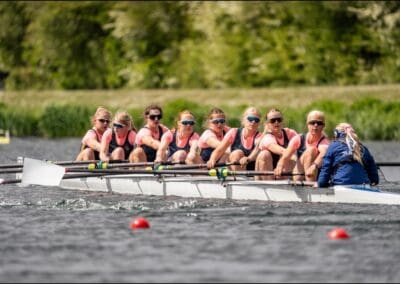
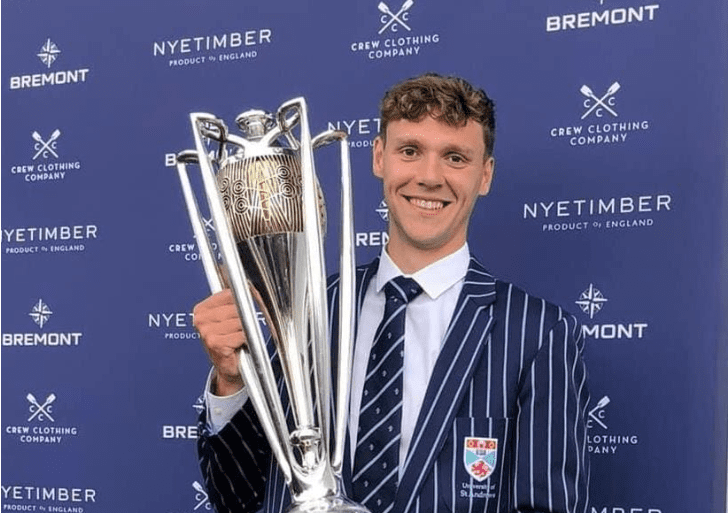
Those recommendations led him to Oxford Brookes, where he pursued a masters in accounting and finance, and to the Brookes rowing programme, widely considered one of the strongest university squads in the country.
“I did three years of rowing at St Andrews as a beginner, and raced at Henley Royal Regatta with St Andrews. We lost to Oxford Brookes on the first day and they absolutely battered us without even trying. After that, my mind was made up. I had to move there.
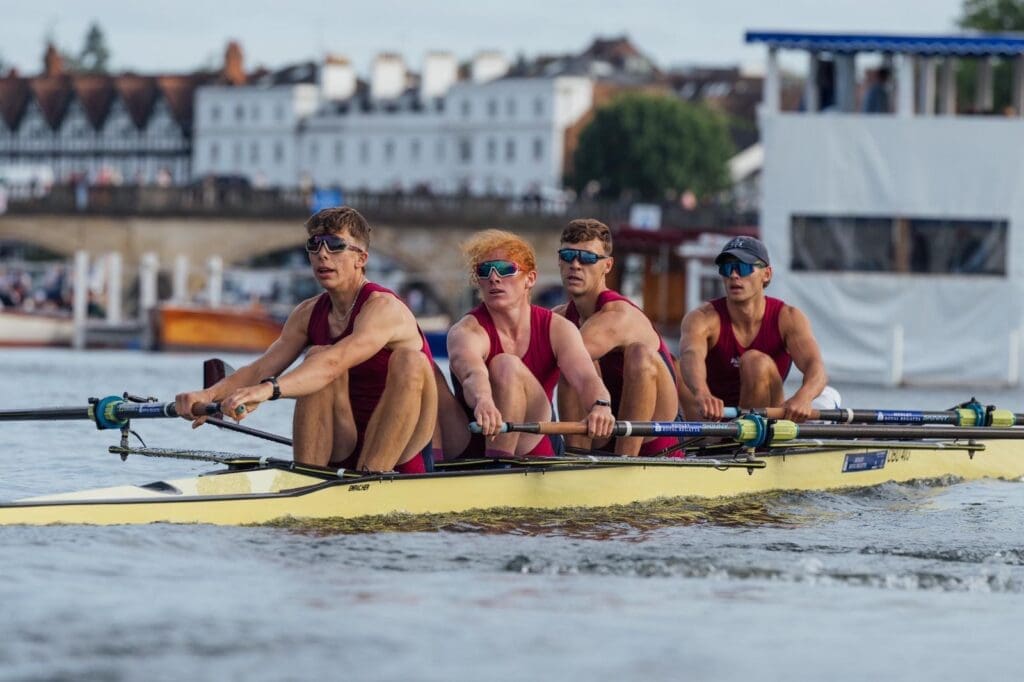
“I ended up making a top Henley boat after training my arse off all year, and we actually won Henley.”
Here is where Shay’s story takes a path that you may not expect, because after winning Henley, he stopped. Not from injury this time. Not from burnout. But from an assessment of what he wanted his life to look like.
“With my strength and my scores, I was told that I did have the potential to make a GB team, but you have to make a cost-benefit analysis. I had my whole life ahead of me. It was taking me an hour to get to training, and an hour back, three times per week.
“I wanted to marry my girlfriend Lydia, I wanted to start a family and I wasn’t going to be able to do those things without a stable income.”
The alternative was to commit from 2024 to 2028, training full-time, giving everything to the possibility of an Olympic selection.
“There definitely was a time where I was seriously considering it, but at the end of the day, it was a four-year commitment to possibly make the GB team for the LA Olympics.”
“It was a decision to take my commitment elsewhere, and for me, it’s more about the journey and working hard every day over the end destination,” Bradley says.
Whatever you choose
He is now working full-time, building the financial stability that makes a future with Lydia possible on his terms.
Look back far enough, and everything traces to a hip flexor in a Derby swimming pool. Shay knows this, and the knowledge sits comfortably with him now.
“In a really weird, bittersweet way, that injury to my hip was probably the best thing that ever happened to me,” he says. “The decision to stop swimming changed the whole trajectory of my life. I wouldn’t have had these amazing studying opportunities if I didn’t have the chance to really throw myself into my A-Levels. I wouldn’t have had the incredible experiences I’ve had.”
“Whatever you choose, you can’t live to regret it. You can’t change anything in the past. You can only change what you’d do now.”
For every young athlete standing at their own crossroads, wondering whether to sacrifice one more year, for the possibility of something extraordinary, Shay Bradley’s journey is not a one off.
The path doesn’t have to go where anyone else expects. And sometimes the injury that ends one chapter is exactly what writes the next one.