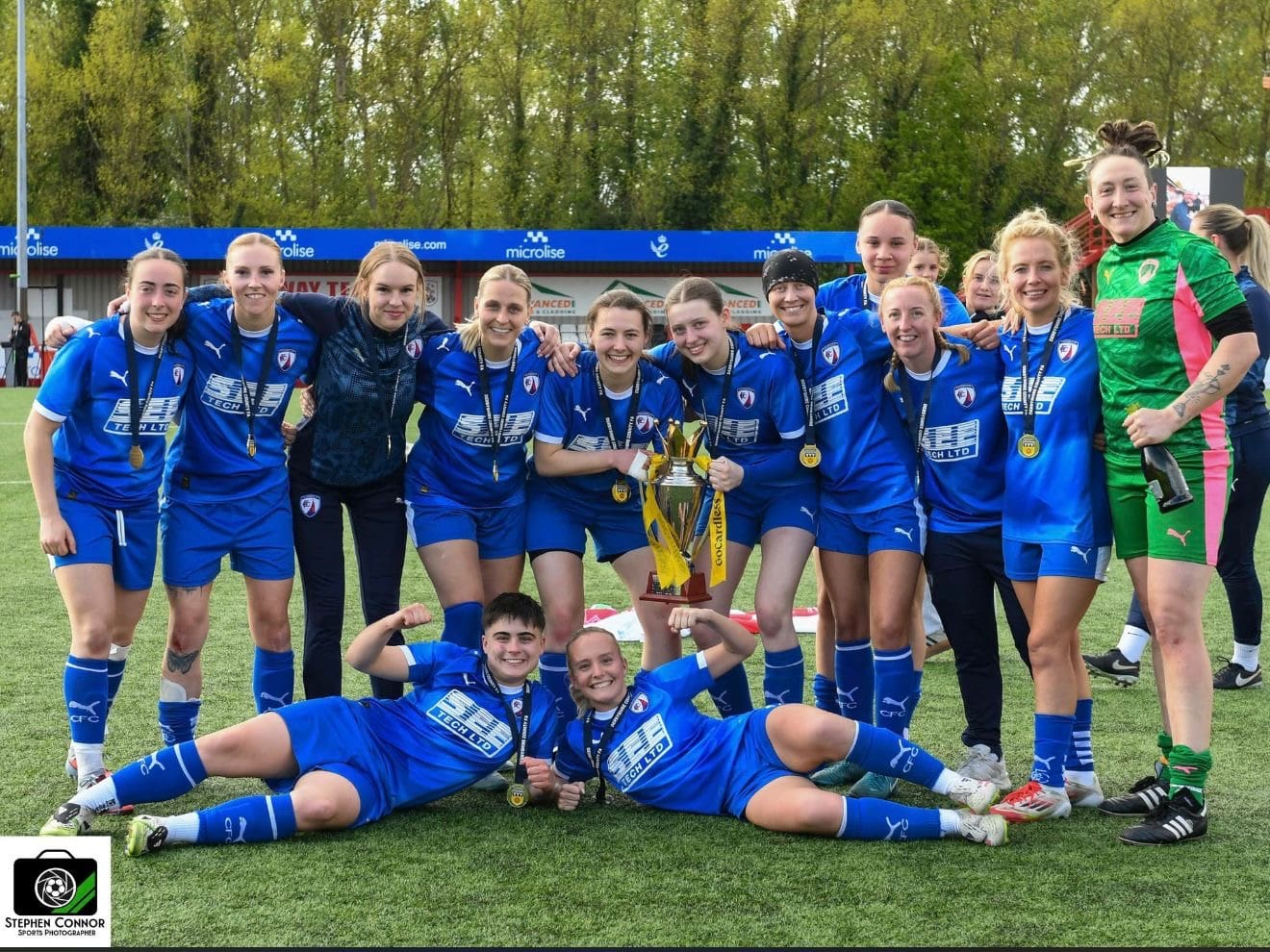
Six years of near-misses, a merger that could have felt like the end, and a captain who never quite saw herself as one. Millie Standen’s story of Chesterfield FC’s title-winning season is a story of more than just promotion: it’s about what relief truly feels like, and who it’s shared with.
There’s a word Millie Standen uses when she talks about winning the league. Not joy, not pride – those are there too – but sitting underneath it like a foundation. The word she reaches for is relief.
“We’d been in that position so many times over the years, so for it to finally happen, you’re almost at a loss for words,” she says.
Six years of almost. Six years of close. Relief is the only word big enough to hold all of that.
After years of finishing second, the players of Chesterfield FC Women finally finished top of their league this season, earning promotion to the National League.
Standen didn’t grow up dreaming of playing for Chesterfield. As a Liverpool fan, she’d supported the men’ s side but had no real connection to the women’s team before she joined in 2020, just after COVID turned the football calendar upside down.
She came through a friend, because it was her local club, and because they wanted the same things she did. What she didn’t expect was to fall in love with it.
“Before I joined, it didn’t mean a lot,” she says.
“But it means everything now. We’re one club, one family. Everyone supports each other, and it’s just a great environment to be a part of.”
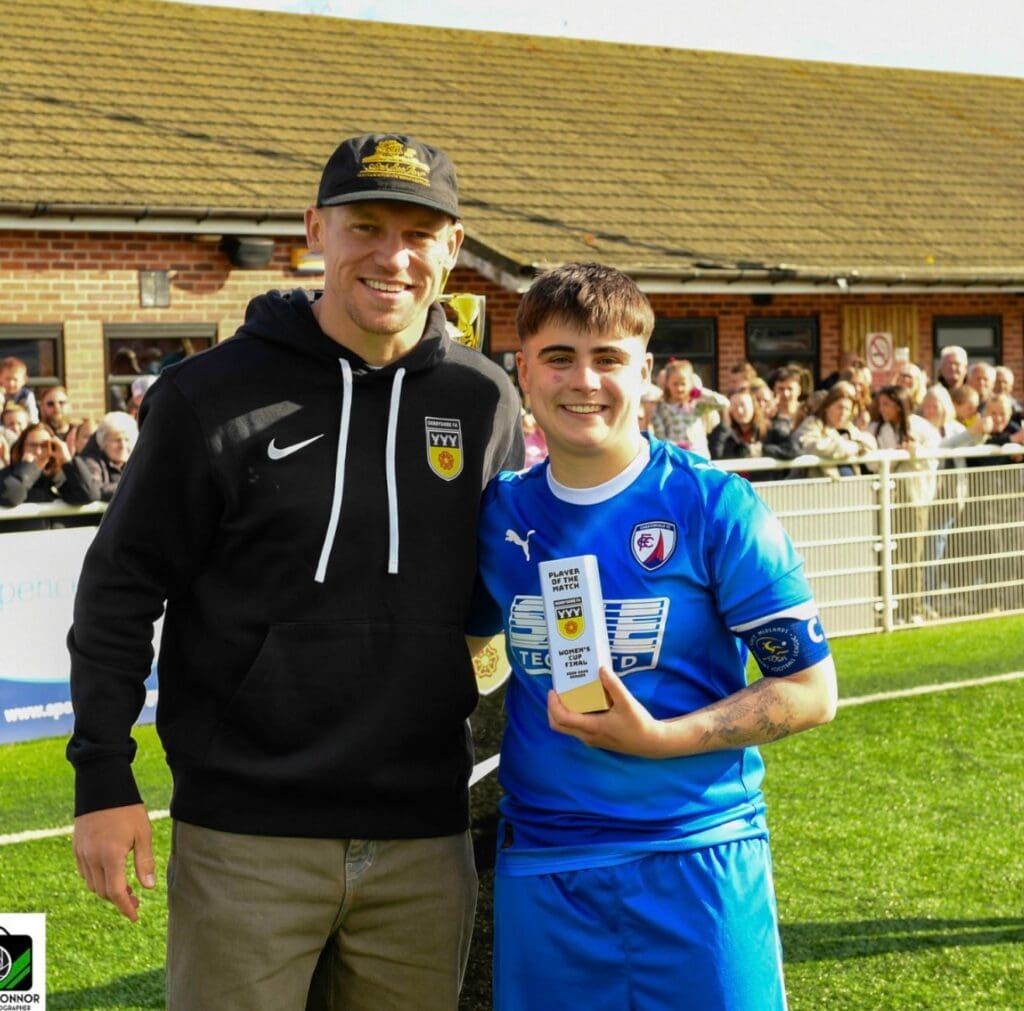
Now, at 23, she’s one of the longest-serving players at the club. She watched Chesterfield Ladies grow, through seasons not going quite to plan, and earned her captaincy.
“I never really saw myself as captain material,” she says.
“But being a part of Chesterfield, and how it’s grown, and the girls that have been involved over the years – I’m just proud. I took on the role and I’ve really enjoyed it.”
Standen’s pride, it became clear, was not in herself, but in the collective.
When the announcement came that Chesterfield Ladies would be merging with Chesterfield FC ahead of this season, Standen’s reaction wasn’t what you might expect from a player who had spent six years building an independent club. There was no grief, and little resistance. There was excitement.
The excitement of doors opening. Of opportunity.
“In women’s football, there’s only so much you can do on an independent basis,” she says.
“We’d built the foundations as the individual club. And then the men’s club just further pushed that on and supported us in every way.”
That framing is what mattered most; Chesterfield Ladies didn’t disappear into the merger, rather, they were the bedrock of it. After six years of work, of development, of coming agonisingly close to promotion year on year – all of that transferred into the new club. It didn’t dissolve, it became the thing the new club was built on top of.
Though the two clubs had been affiliated with each other in the past, they had been completely separate in recent years.
She acknowledged that with change came apprehension. But around the club, the overwhelming feeling was that this was a next step, not a loss. For the current team, but also the future of girls at Chesterfield.
“It’s not just us right now,” she says. “It’s all the young and aspiring girl footballers in Chesterfield – they are going to have the opportunity because this stabilises the club.
“That made sense to all of us.”
With several long-serving players retiring and others moving on, only a handful crossed over into the new setup. Standen was one of them.
Many of the players brought in were young. For some, it was their first experience of women’s football at this level.
But from the first training sessions, from the first preseason game, something felt right. The balance of experience and energy. The mix of players who knew what it had taken to get here, and players who brought no baggage, just hunger.
“The vibe felt right,” Standen says.
“It was a nice balance of older, experienced players and those that are young. Everyone gets on really well. We’re like one big family, all friends, we support each other.”
What followed was a season of watching that family grow into itself.
Off the pitch, the promises of the merger were also being kept.
A better home ground. Improved training facilities. Sponsors. The kind of structural stability that lets a team stop worrying about the basics and start focusing on winning. They were invited to the men’s kit launch, given a stand of their own, introduced to supporters who were only just learning their names. They walked the pitch at a men’s fixture, trophies in hand, in front of a huge crowd.
That stability showed in the results. A dominant home record built on the advantage of simply having a ground they were proud to play on.
“I’d definitely say it’s lived up to expectation,” Standen says.
When the final whistle blew, and the league was confirmed, Standen’s thoughts lingered around those who weren’t there.
“It was nice to reflect with people that have left, because they were a big part of the journey too.”
The squad that wins doesn’t always contain everyone who built the path to victory. Standen, more than most, understood that the relief she felt on that final day belonged to more than just the people on the pitch.
The joy was collective. The relief was collective. Even the people who had moved on got to feel it too, in whatever way a phone call or message at the end of a long season can carry that weight.
If you could go back to the day the merger was announced, what would you tell yourself?
“Enjoy each and every moment,” Standen says. “Don’t take it for granted. Hold on to the feeling.”
It’s simple advice; the kind that sounds almost obvious until you consider what it costs to follow it – after six years of ‘almost’, a club rebuilt from its own foundations, a squad of young players finding themselves, and a captain who never stopped believing it was possible.