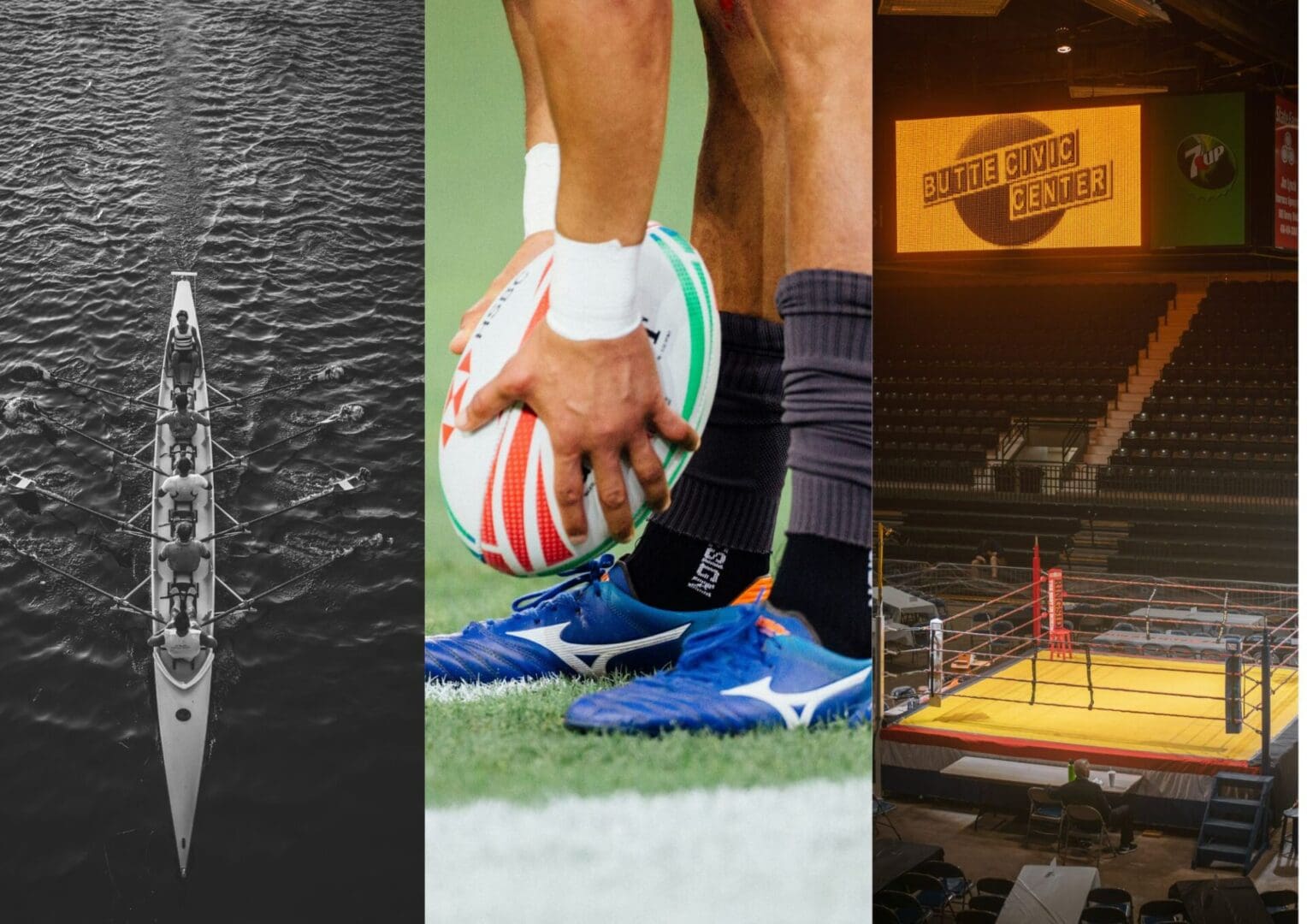
When injury removes athletes from the sports that define them, recovery becomes as much mental as physical. Three athletes share the emotional reality of being side-lined.
For injured athletes, recovery creates a space between participation and absence, where confidence, identity and purpose are quietly tested.
Physical capability equals personal value
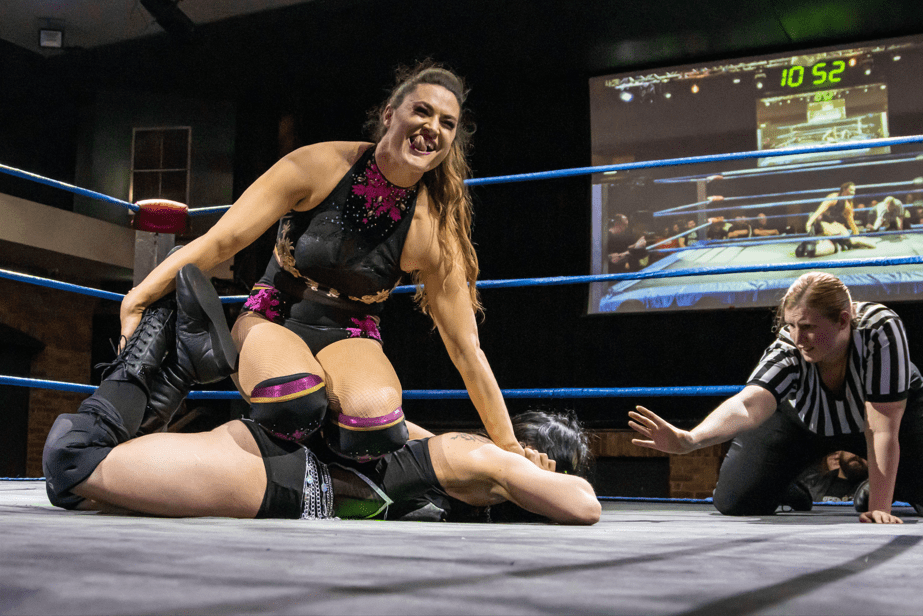
English professional wrestler Nina Samuels – also known as Sam Allen – saw concussion remove her from a sport built on physical contact and control, leaving her questioning who she was without wrestling.
“Naturally, pro wrestling has its hazards, and injuries are something that I’ve always had to deal with,” she says.
“The worst injury I’ve ever experienced was when I had a concussion.
“I’ve been concussed twice and both times it was due to the impact of me landing on my head and hitting the mat during a match.
“The second time was the worst and it wiped me out. Everything around me went in slow motion.”
Unlike a visible physical injury, Samuels found concussion difficult to understand and even harder to manage.
“When you get a physical injury, it’s much easier to figure out what’s going on,” she says.
“You can get an expert to look at it and get a clear gauge of how long it is going to take you to bounce back.
“Whereas with a concussion, it affects everything. Physically my body felt completely fine, but because of the brain injury I can’t use my physically fine body in a way I would normally be able to do.”
The emotional impact quickly became overwhelming.
“It was very exhausting for me because wrestling is a huge part of my identity.
“I’ve been doing this sport for 12 years and I had feelings of ‘Who am I now? Where does this leave me?’.
“After seeing a friend retire from wrestling due to concussion, it was a constant reminder of ‘what do I do if I can’t come back from it?’”
Rather than allowing herself to remain trapped in that mindset, Samuels focused on finding smaller ways to reconnect.
“I found other things I could do within the sport, like coaching which I had already been doing, and commentating at live shows,” she says.
“It felt like I was still contributing to something I was so passionate about.”
Even then, recovery remained emotionally difficult.
“You’re watching people do what you love, thriving, and there is an aspect of jealousy that I wished I could be fighting in the moment and regain the spark back that I desperately craved.
“But I continued to remind myself I was still in the environment and participating in every way I could at the time.”
Although her recovery lasted only seven weeks, Samuels says the uncertainty surrounding concussion made it feel far longer.
“There were so many days where the worry of retirement scared me, and where would that leave me in the long run,” she says.
“It sounds weird given my recovery was only seven weeks long, but the thoughts that run through your head in that time are intimidating, and it is a brain injury at the end of the day, you are mentally affected and it is challenging to get over.”
Injury as interruption at the final threshold
Former Olympic rower Timothy Male suffered a fractured wrist in the lead-up to the 2000 Sydney Olympic Games, ending his chances of competing on sport’s biggest stage just weeks before the event.
“Injuries happened periodically throughout my course of training and especially with rowing there is a lengthy period of constantly loading your body,” he says.
“The injury I sustained at the Brisbane training camp in the approach to the 2000 Sydney Olympic games happened as an accident.
“I was carrying the boat, and a trestle was laying flat behind me which I didn’t notice and on instinct I saved the boat instead of myself.”
Male fractured a small scaphoid bone in his wrist and was told recovery in time for the Games was unrealistic.
“That was a build-up that I’d been seeking to do since 1992,” he says. “Eight years of work dedicated to racing in the Olympics and to have that injury happen two weeks before competing was pretty tough to wrap my head around.
“At the time, that was the worst thing that happened to me.
“When you get into that funk, you’re quite introspective and the mental toll it took on me was heavy.
“I felt bad for my teammates, as you do have a sense of accountability to others and I felt like I had let myself and the team down,” he says.
Given the option to remain in Australia or return home, Male chose to leave.
“I couldn’t be in a nation where everything is all about the Olympics and there was no escape.
“I thought: ‘I can’t be having a dark cloud hanging around my crew mates, they’ve still got a job to do, they are just as driven as I am’.
Back in Britain, the isolation deepened.
“I could pick and choose what parts of the Olympics I wanted to see, and during my lowest points I could lock myself in a dark room,” he says.
“I went through some pretty dark times and felt some onset of depression, but I had to keep reminding myself that if this is the worst thing that’s ever happened to me, I’m 25 years old and have broken my wrist which stopped me doing the thing I love.
“It gave me a greater scope of the privilege that I am in to be in that position in the first place.”
Desperate to return to training, Male rushed back too quickly after his cast was removed.
“The day after the cast came off, I did a short row and by that evening I had a sore throat. It turned out to be glandular fever.”
After spending six weeks recovering from a fractured wrist, Male then faced another six months of rehabilitation.
“That was the point when I was particularly unhappy with the cards that I had been dealt because I just wanted to get on with things and I had to deal with the burden of waiting even longer.”
Present, but not belonging
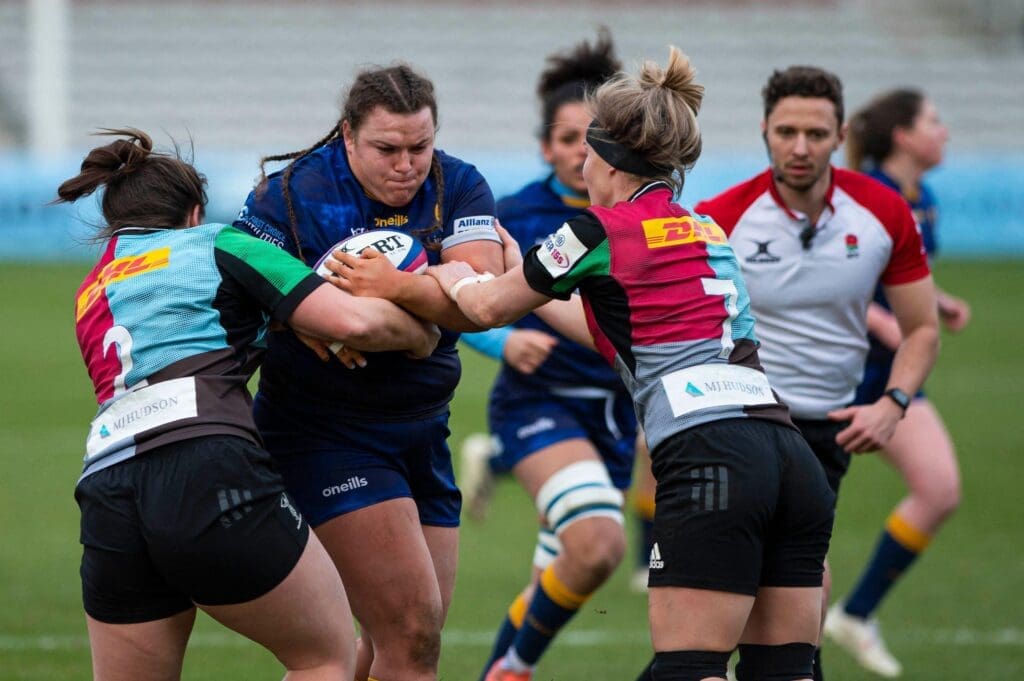
Ealing Trailfinders player Flo Long, 26, is currently sidelined with a serious neck injury that has kept her away from training and competition for more than a year.
“The chance of playing again feels so far away and unattainable at the moment,” she says.
“I’m out right now with a herniated disc in my neck that’s compressing my spinal cord and it’s the first time I have been properly injured.
“It’s been about 12 months, and I’ve still got about six to go until I make full recovery.”
Unlike many rugby injuries, there was no major collision that triggered it.
“It flared up one day with muscle spasms, pains all over and it got to a point where there were so many pins and needles in my body that I couldn’t get to sleep at night,” she says.
Long had already signed for Ealing before the injury emerged, making the experience even more emotionally complex.
“Ealing has put me in contact with a spinal specialist who wanted to work with me to get better, but I’ve had a different opinion from the NHS where they’ve said, ‘you’ll never play rugby again’.
“The more specialists I spoke to the more I realised the injury was not even based on symptoms entirely, but on how my scans look as I’ve now been symptom free for nine months.
“That part, mentally, has been difficult to come to terms with, because I have no reminder that I am hurt other than if you looked at the scan results.”
Being unable to fully integrate into a new team has also left Long feeling detached.
“It’s not been easy coming into a new team where I haven’t been on the pitch at all and just sat on the sidelines,” she says.
“This is not through not being included in any way, but I do feel quite detached from the team, particularly on a game day.
“On away games when everyone is on the bus together and I am sitting at home watching a live stream, I feel really separate.”
The uncertainty surrounding her future has only intensified those feelings.
“Socially, I get on with them great but then again, I haven’t done a single rugby session with them and I don’t even know if I will jel with them.
“Coming to a new team, everyone asks, ‘Oh do you like it? What’s it like?’ and I wouldn’t know.”
Long admits she has struggled with feelings of guilt during her recovery.
“I’ve had in my head the fact I’m signed and not even at the minimum been able to train. I feel disappointed in myself that I’m letting the club down.”
Conversations with coaches, however, have helped reassure her.
“I’ve had conversations with our head coach, when I have been particularly feeling like that and he has reassured me that I’m not letting anyone down and the team still massively values me,” she says.
“It doesn’t stop me from feeling drained, but I frequently remind myself that the coaches still believe in me which puts my mind at ease a little bit.”