What began as a wave of allegations on social media became a turning point for British wrestling. Women across the industry challenged years of silence around abuse and misconduct, forcing promotions to confront a culture many had long ignored.
Just a few years ago, for the majority of female wrestlers, the fight didn’t end in the ring. It was only the beginning.
Backstage, Britain’s wrestling scene was often dominated by a culture that sidelined women, protected powerful men and left young performers vulnerable. Female wrestlers regularly dealt with poor promotion, misogyny and unsafe working environments, while predatory behaviour was too often dismissed or ignored.
For many performers, the sound of the bell and the referee’s count of three signalled not the end of the battle, but the start of another one.
Millie Mckenzie was 17 when she started dating her then-coach, Travis Banks. She told BBC Sport in a 2022 interview: “I hated wrestling. I hated everyone. I didn’t talk to anyone, I just didn’t want to be there because I’d had to have been around him and all his friends.”
Banks was released from NXT UK, WWE’s former UK-based sub-brand, after allegations were brought forward against him.
By June 2020, stories like McKenzie’s were no longer being shared privately. Women across British wrestling began publicly accusing wrestlers, trainers and promoters of abuse, manipulation and misconduct. Within hours, allegations spread rapidly across social media under the hashtag SpeakingOut.
The movement quickly sent shockwaves through the wrestling industry.
Championships were vacated, performers lost their jobs and some figures became subjects of police investigations. For many women in wrestling, SpeakingOut represented the first time the industry had truly been forced to confront the culture it had allowed to grow unchecked.
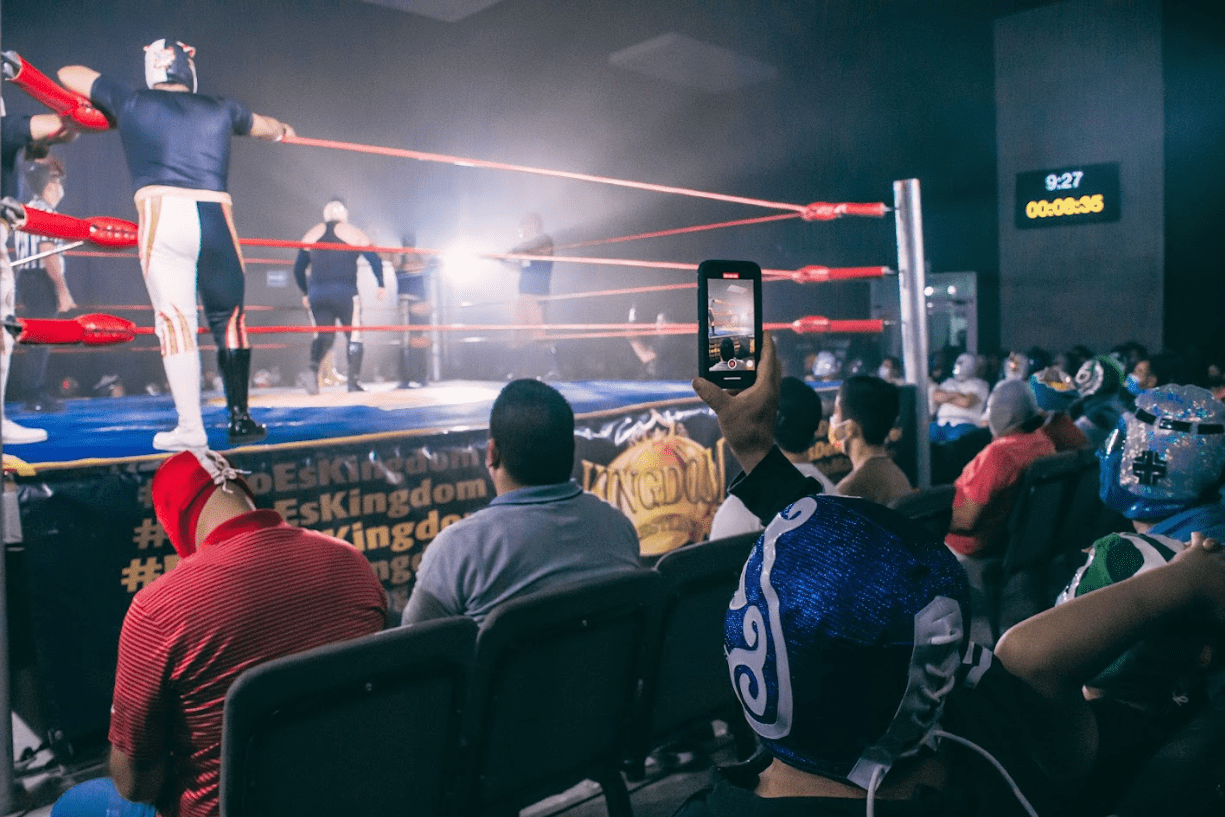
The allegations emerged during a period when British wrestling was experiencing a major resurgence in popularity for the first time since the late 1970s and early 1980s. Fuelled by the success of independent American wrestling promotions and the rise of online audiences, companies such as Progress, Rev Pro and WCPW – later known as Defiant – transformed the independent scene into a booming industry.
For years, wrestlers across the country had performed in small venues in the hope of being noticed by larger companies. As British wrestling gained momentum, local performers suddenly found themselves wrestling in sold-out venues, building loyal fanbases and attracting attention from major international promotions.
Much like their American counterparts, British promotions presented themselves as an alternative to mainstream wrestling, offering grittier shows and a more realistic style. But behind the scenes, the rapid growth of the industry often came without proper oversight or safeguarding.
Dominic Bascombe, Equity’s Regional Official for the North East, Yorkshire and Humberside, said the lack of structure within wrestling made accountability difficult.
“A big barrier has been that there isn’t a management association body that covers wrestling producers,” Bascombe says. “As a result, it was difficult for Equity to create an agreement that would cover a wide group of producers. Instead, we had individual agreements with different promoters.”
While many women were fighting to make wrestling safer, others had already spent years changing perceptions of women’s wrestling itself.
For decades, female wrestlers were often treated as secondary attractions, given limited match time and reduced to repetitive storylines. But a new generation of performers gradually helped transform the role of women within the industry.
Lifelong wrestling fan Mara Latimer grew up watching wrestling with her family and said female wrestlers played a major role in helping her connect with the sport.
“Pioneers like Stepahnie McMahon, Chyna, Lita, and later on Paige/Saraya helped change women’s wrestling from being nothing more than the same storyline for every girl, with only two to five minutes of showtime,” she says.
“As a female wrestling fan, these people are the ones who made me feel not ashamed by the stereotypically ‘mans sport’ persona the industry originally had.”
Latimer believes women’s wrestling helped modernise the industry, bringing in new audiences and changing attitudes toward female performers.
“I think it’s like a coin, on one side the modernisation brings in a new generation of fans and keeps the industry alive and relevant, and on the other hand there is so much to improve on too. It’s a work in progress absolutely,” Latimer says.
She added that, without the work and dedication of female wrestlers past and present, the industry would not be as safe or entertaining as it is today.
As allegations continued to emerge during SpeakingOut, wrestling promotions increasingly faced pressure to introduce meaningful safeguarding measures.
Spirit Wrestling, a Sheffield-based promotion, was one of several independent companies to reach an agreement with an outside organisation aimed at improving safety standards.
Equity created official guidelines and rules tailored to individual promotions in an effort to create a safer working environment. Promotions and performers worked alongside the organisation to establish formal codes of practice and clearer reporting procedures.
The agreement between Spirit Wrestling and its talent included a commitment to thoroughly investigate allegations and impose serious consequences where claims were found to be true. The promotion also introduced a formal reporting system, allowing anonymous complaints of abuse to be submitted.
Bascombe said the agreements represented an important shift within independent wrestling.
“I had an agreement with Spirit Wrestling back in 2021. The agreements set out basic contract terms that would be used, but in particular, introduced a Dignity at Work policy which wasn’t common at the time.
“The policy explored how to ensure there was appropriate safeguarding, how to make and handle complaints and ensure that the no tolerance of abusive behaviour was made clear,” he says.
Bascombe added that several promotions, including North Wrestling, Prime Wrestling and TNT Extreme Wrestling, later signed similar agreements with Equity as companies attempted to modernise what had long been outdated culture.
Equity also worked closely with the All Party Parliamentary Group on Wrestling, which was established to bring issues raised by the SpeakingOut movement to Parliament. The group was led by Labour MP Alex Davies-Jones, who helped raise awareness of issues within the industry.
Fans like Latimer grew up idolising female wrestlers without fully understanding the challenges many of them faced outside the ring. But as more women began speaking publicly about their experiences, wrestling companies were forced to confront problems that had existed for years behind closed doors.
The SpeakingOut movement changed British wrestling because women forced it to. Wrestlers, crew members and fans collectively pushed the industry toward greater accountability and inclusivity, even as many questions remain unresolved.
While it is still unclear whether meaningful change has spread across the entire wrestling world, Britain’s independent scene appears to have taken significant steps to ensure the industry never returns to the culture that SpeakingOut exposed.