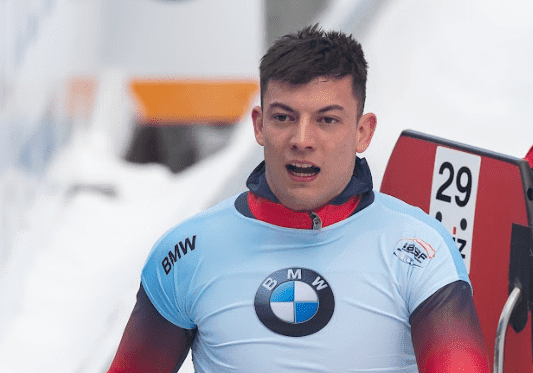
Matt Weston’s journey to Olympic gold was never straightforward. From a teenage back injury that ended his taekwondo dream to a crushing Olympic setback in Beijing, his career has been defined as much by failure as success – and what came next.
Although Matt Weston can call himself a two-time Winter Olympic gold medalist in 2026, this has not been his first taste of success on the international stage.
After taking up taekwondo at the age of three, Weston enjoyed a successful youth international career, representing England and winning international medals – both gold and silver – at the European Cup in 2012.
In this case, success came before the biggest challenge of Weston’s early sporting career.
“I had a stress fracture in my back from taekwondo where I had over-used the muscle and my surgeon told me I would have to wait two years for it to heal. That was horrible,” he says.
“I was so young, I did not understand the gravity of the situation and what that meant for me and my future, and also the emotional impact it would have on me too.”
Two years passed and Weston was now 17 years old. Was he ready to step back onto the mat? Unfortunately, the answer was no, meaning his successful youth taekwondo career came to a halt.
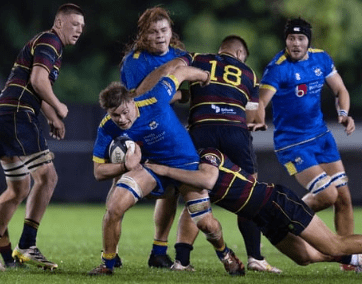
At this time, rugby was also a major part of Weston’s life: from learning the basics at his local rugby team in Crowborough, to being part of a Saracens Academy College and representing his county.
Despite his taekwondo career coming to a halt, Weston took the positives from the challenges he had to recover from.
“The skills and fundamentals from those different sports are things I have taken into skeleton,” he says.
It may seem Weston was referring to the physical skills he developed from taekwondo and rugby, but he was also referring to the psychological resilience and strength he had built from the difficulties he faced – such as rejection from Saracens Academy College and being forced to stop competing on the international stage.
“During my sporting career I have had a lot of trial and error in terms of being able to deal with setbacks,” he says. “But it is probably only through skeleton that I have noticed that when I have been able to have 20 or 30 minutes after an event to get myself back to normal, I respond better to reviews and coaching.”
Many athletes go through a similar experience to Weston, only later in their careers finding out what works for them in order to deal with the challenges sport throws at them.
With the setbacks of international taekwondo and Premiership rugby academies, it seemed like he was still destined for elite sport.
Perhaps his weightlifting coach felt the same when he recommended Weston attend a ‘Find Your Gold Day’, where prospective athletes are put through their paces to find their strengths. Data is then shared with various sporting national governing bodies (NGBs) to see if any athletes fit their criteria.
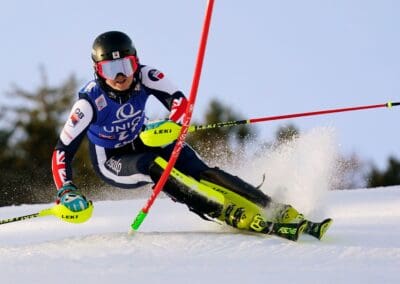
With Weston already possessing an abundance of strength and power thanks to his taekwondo and rugby background, he was selected for Great Britain Skeleton. Although he could now compete in a completely different sport on the international stage again, Weston was on his way to facing more sporting adversity before success.
Learning to adapt
In December 2019, Weston finished 15th at the Europa Cup in Winterberg.
“I have had to teach myself through my skeleton career how to deal with things. I was not able to deal with setbacks as well as I am now, but I have been able to learn with the help of the team around me that this is the best way to deal with challenges – but it has not always been like that,” he says.
The work Weston put in began to pay dividends when he won a gold medal on the World Championships circuit in November 2021.
Still early in navigating how to deal with setbacks alongside success, his attention turned to the Beijing Winter Olympics of 2022. However, the build up to the Games was far from perfect.
“The selection process was a bit weird and different because it was in covid and that meant I did not have the full experience but still being selected was amazing and something you never take for granted,” he says.
The less than ideal preparation was followed by what Weston describes as a “huge failure”.
He says the team took “a risk with the equipment and it did not work”, leading him to finish as the highest-placed British athlete in 15th at his first Olympics.
“I still believed I would medal right until the last run even though we had problems all season,” he says. “We always bring out a few surprises at the Olympics and we thought they would make a difference.” Even up until the last run I thought I could still win this but then I had a moment where I realised I could not win.”
“You build up your whole career as an athlete for the Olympics and it is meant to be the best part of your career but it was not in terms of the racing. I wanted to quit the sport and I found that really hard.
“I used that frustration and disappointment to fuel the fire and make sure that result never happened again. After the Games I thought I felt I had so much potential left.”
Coming 15th at your first Winter Olympics is an incredible achievement, but it was not enough for Weston’s winning mentality, especially as he notes that it was the first time Great Britain had not won a skeleton medal at the Games.
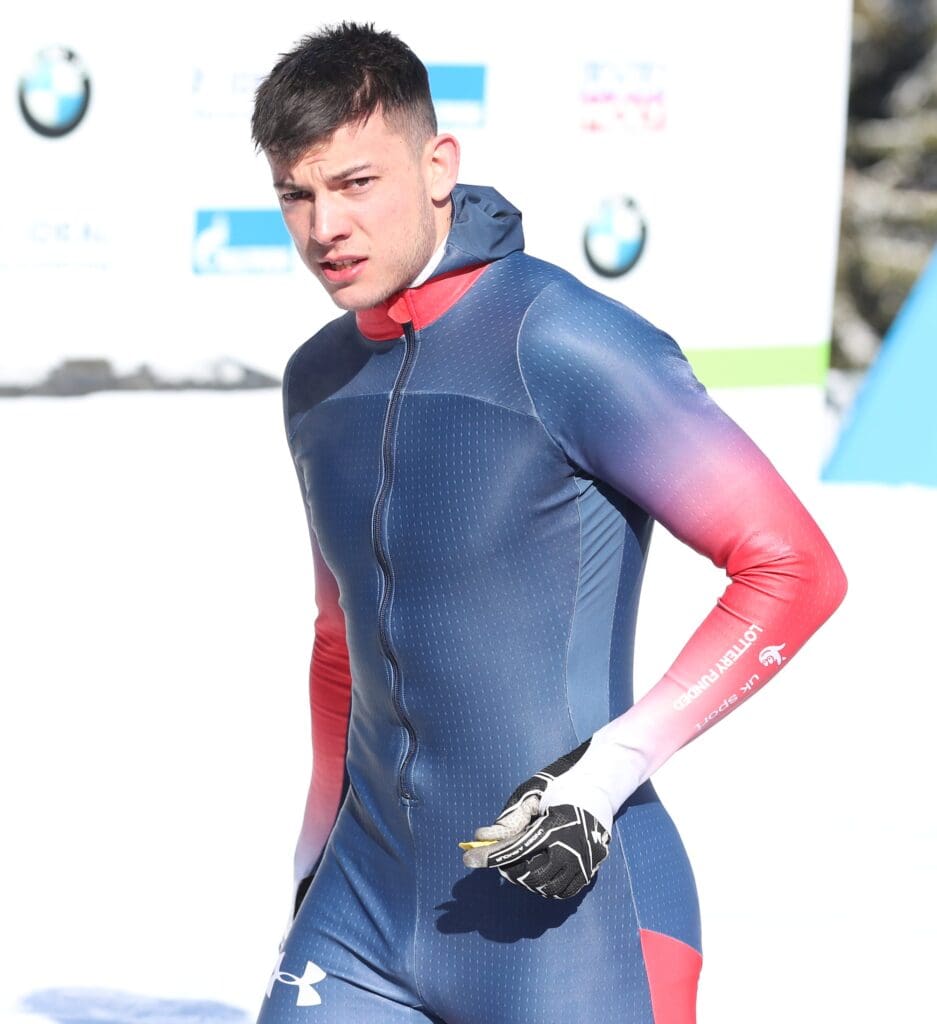
The turning point
So, what changed?
Previously, Weston might have attributed performance to his pre-race preparation.
“I used to have a perfect blueprint of what I would do before a race that I thought would mean I would be successful, but that has changed now because there have been a few instances where things out of my control have happened and made me rethink my prep,” he says.
The World Championships of 2023 in St Moritz was perhaps the turning point.
“I did my first run and I was in first place, but when I went back to the top of the track there was lots of commotion and my coach collapsed and was taken to hospital, which ruined that idea of the perfect plan and made me reflect that I did not need that perfect setup.”
“I have decided to change my focus so that I am the most adaptable athlete in the world, rather than trying to have the perfect preparation before every race and being the perfect athlete.”
Having such an important part of his team taken to hospital could have shifted an athlete’s mindset away from the race entirely,but for Weston it became another step in his development.
“I ended up winning that competition, but It was not how I planned to win it.”
Back-to-back success
Weston continued his fine form, winning back-to-back World Championships in 2024 and 2025, giving him confidence reinforcing his resilience heading into the 2026 Winter Olympics.
He says that even the experience around the Games – being given his kit in person and having official photoshoots – made Milan more special, and he was ready to use the pain from the previous Olympics to put things right.
And he did exactly that.
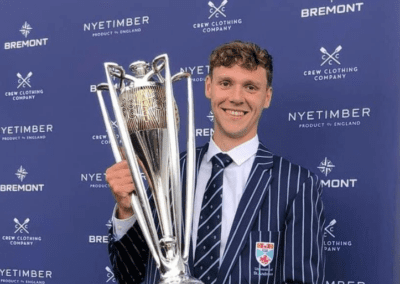
Weston led the pack throughout the Games, finishing with a gold medal in both the individual and team events.
“When I crossed the line on my last run I just saw green numbers,” he says. “Normally when you cry you have a lump in your throat but I did not have any warning – I just started crying. The emotion was overwhelming, but the main feeling was relief. All the hard work I have put in was worth it.”
He also recognised the impact of having his family present.
“No one was allowed to travel at the last Olympics, but this time the people who supported me and watched me race on the biggest stage could come and watch. They enjoyed watching me win, and that was the biggest positive.”
Advice for others
So, what advice does a gold medallist have for those recovering from setbacks in sport?
“I went through a stage of copying what opponents did to make them perform, but it did not work for me,” he says. “It is more trusting yourself and your own feelings – what benefits you and what works for you to overcome that challenge.”