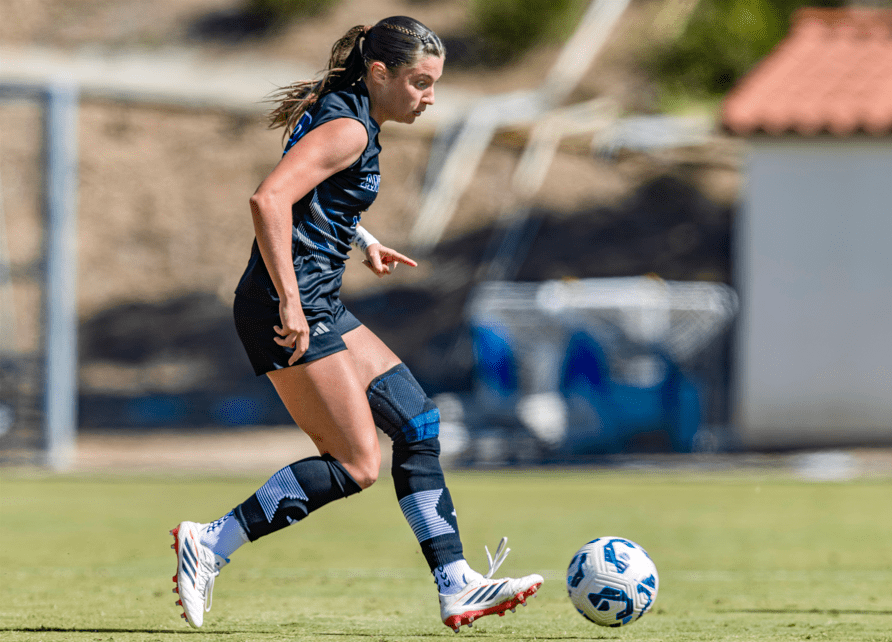
Katie Howard sits down with a D1 soccer player who lost two crucial years of recruitment to ACL injuries and questioned whether she should quit the sport altogether. Instead, she learned a lesson far bigger than soccer.
At 14 years old, Taylor Esparza thought she knew exactly who she was.
A talented soccer player attracting attention from national team camps and college recruiters, her future seemed mapped out.
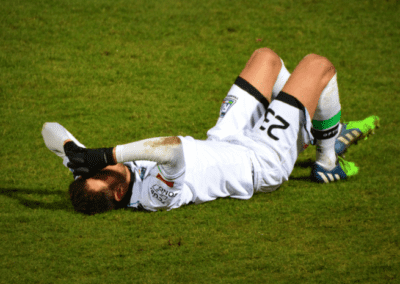
“I feel like it’s every athlete’s fear to hear the words, ‘you tore your ACL’,” she says. “My first thoughts were ‘Why me? Why now’ and as much as it was very taxing physically it also a mental strain.”
“I have torn both my ACLs and I’ve had a medial meniscus surgery on my left knee. The first ACL tear was in my freshman year of high school. I waited a year, went back to playing and three weeks back into season, my studs got caught in the turf and then I tore my other ACL.
“I waited a few months to get surgery because it was really soon after getting cleared the first time, and mentally I don’t think I could have gone to another rehab.
“I was close to getting cleared again, but my knee just didn’t feel right. It just felt like something was wrong.
“I was warming up one day, then I felt a little pop. I had to go get an MRI and there was a small tear in my medial meniscus and my kneecap would get caught on it.
“I had to get a quick little clean-up surgery on that and then I was cleared in October of 2025,” she says.
While the physical challenges of rehabilitation were significant, Esparza says the emotional toll of being sidelined was often the hardest part of the process.
At the time of her first injury, soccer was more than a sport, it was engrained into a part of her.
“I was 14 when it first happened, I felt like my only identity was through my sport,” she says. “So when that was taken away, it was like ‘who am i?’. Soccer was my escape from reality and all the other stuff that happens in my life.
“Now that I don’t have that, what do I do?”
The realities of ACL rehabilitation quickly extended beyond missing matches and training sessions.
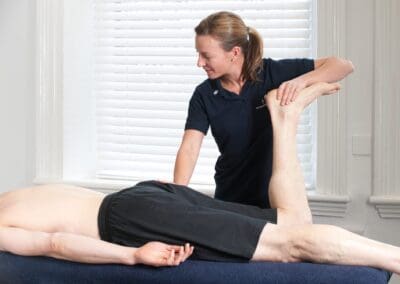
“I think what gets overlooked is that you have to relearn how to walk. You have to relearn how to do all this stuff that are everyday tasks.
“You have to have help sometimes putting on clothes, just doing basic things like cleaning your room or just walking to the kitchen is kind of taken away from you.
“It all plays a role because it feels like your quality of life shifts drastically. I am used to being so active and then you have to learn to basically live again, it’s all very mentally draining.”
After spending a year fighting her way back, suffering a second ACL tear so soon after returning felt particularly cruel.
The injury also came during a crucial period for college recruitment in the United States, leaving Esparza questioning whether the sacrifices were worth it.
“The peak two years of recruiting, I was out with injury,” she says. “It was a lot of doubting and questioning whether it was even worth carrying on.
“It felt like I had put in all this work for an injury to ruin it.
“But I felt as if I deserve to give myself the shot to try before I call it quits,” she says. “Even if I quit soccer or if I stayed with soccer, I was still going to have to go through rehab regardless.”
Rehabilitation brought another challenge that many injured athletes will recognise: loneliness.
Although Esparaza had strong support from her physical therapy team and family, she found herself feeling increasingly isolated from the sport that had previously felt like her whole world.
“People stop reaching out to you because you’re not playing anymore,”she says. “You’re not involved in the group sessions and I definitely felt kind of isolated.
“There were a lot of times where I did feel very alone because I felt like no one else related to what I was going through.”
Those experiences eventually shaped the way she viewed both herself and the sport.
Today, as a D1 athlete at the University of California, Irvine, Esparza says the injuries gave her a perspective that only has developed due to injury.
“Having multiple injuries, so close together, has taught me that I am always a human before I am an athlete,” she says. “I want to go pro and it’s my passion, but it’s not who I am.”
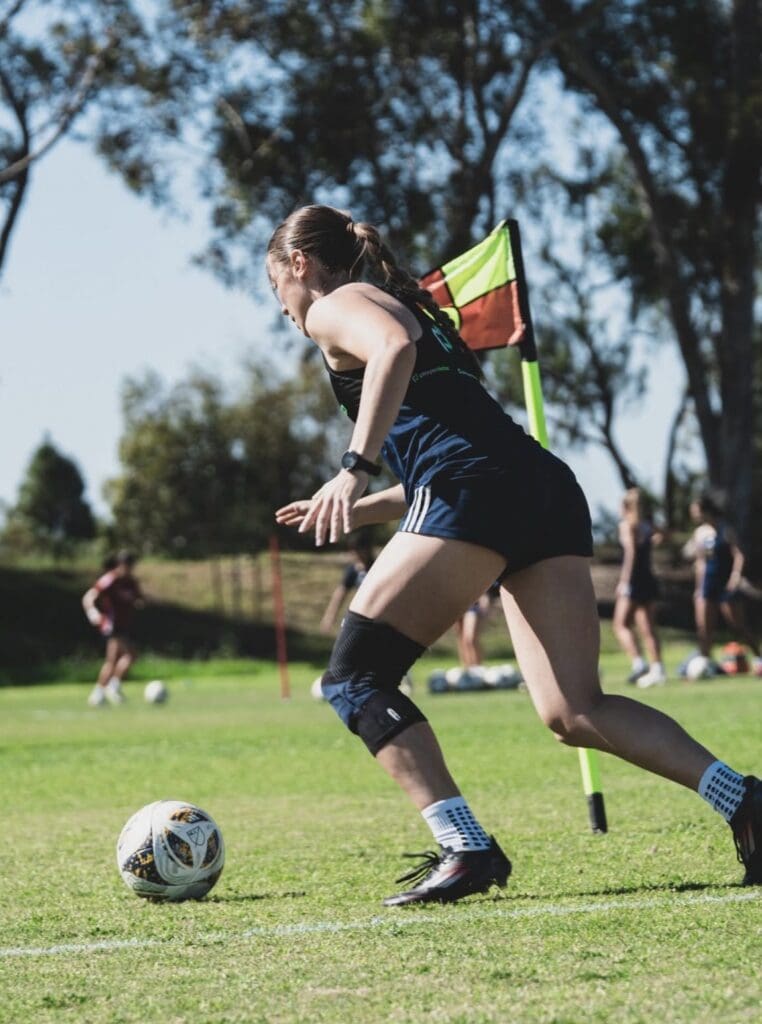
Now back on the pitch, she approaches the game with a greater appreciation for the opportunities she once took for granted.
“When the coach says you’re running fitness, it’s like, wow, I get to do that.
“At one point, I dreamed of being able to run again.”
Looking back, Esparza believes the years spent in rehabilitation shaped her just as much as the years spent competing.
The teenager who once questioned whether she would ever return to soccer is now competing at D1 level, carrying lessons learned through setbacks, surgeries and countless hours of rehabilitation.
“I’m for sure a better athlete than I was before I tore my ACL,” she says. “Not only physically, but mentally.”
The first return proved difficult.
“The first rehab, I thought when I came back I had to be perfect,” she says. “Everyone was going through the drills flawlessly and I wondering ‘Am I really that behind?’”
But eventually came the moment she had spent years working towards.
“My first college goal, back from rehab from when I got cleared in October 2025, and it felt like I was back where I needed to be.”
The injuries were never the end of the story Esparaza had imagined for herself, instead became another chapter.
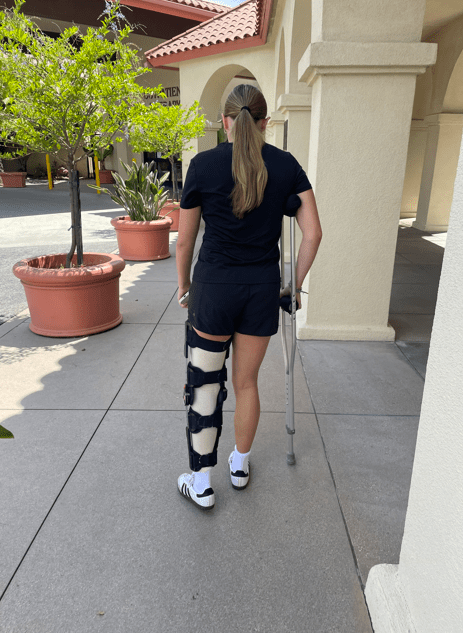
“When I found out I needed a third surgery, I remember thinking, ‘Is this even for me?’,” she says. “But I always think that one day I want to write my own book. This is just adding chapters to my book.”
It is a perspective she hopes other injured athletes can adopt when faced with their own setbacks.
“You can’t change the injury in the moment, but you can change the outcome of it,” she says. “If anyone has to go through injury, they should look at it as a rebuilding moment. It’s not going to tear you down.”
“It’s taught me to realise soccer isn’t who I am, it’s what I do.”
After three knee surgeries, two ACL reconstructions and years of uncertainty, Esparaza’s greatest achievement may not be returning to the field at all.
It is understanding that the game she loves is something she plays, not something that defines her.