Ultra-runner Emily Fairs knows that success isn’t just built on endurance – it’s built on recovery. From paddling pools mid-race to managing post-ultra blues, Fairs reveals how fueling, rest, and resilience are the foundations behind her rapid rise in the sport.
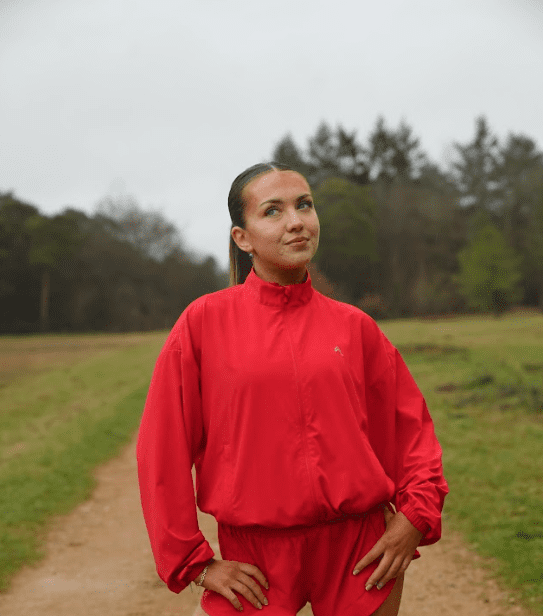
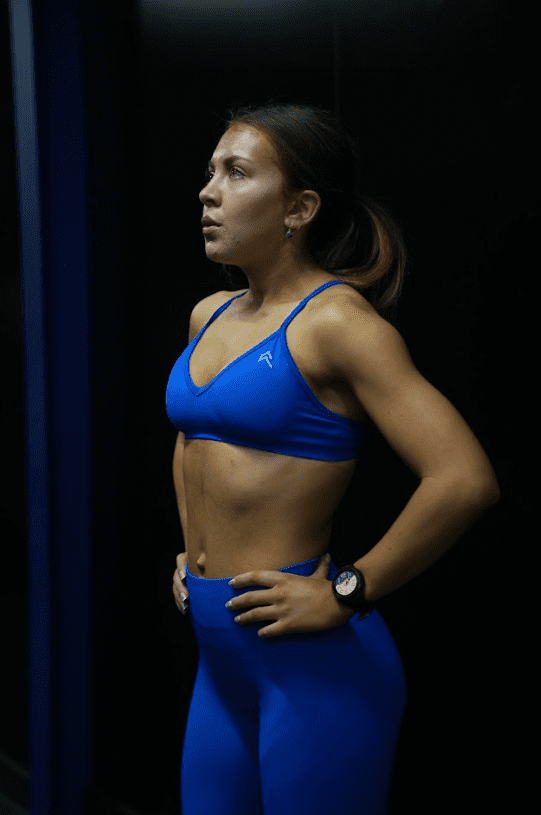
Emily Fairs has only been running for two years, yet has been climbing the ranks of the sport already; most recently having placed first woman in the London to Brighton 100km race.
However, Fairs’ success in ultra-running isn’t purely down to toughness. It’s about prioritising the body and building physical and mental resilience, ready to deal with miles of harsh trail and empty paths – a far cry from the crowds of major road marathons.
Despite being a relative newbie on the scene, Fairs already knows the importance of correct fueling, preparation, recovery post-race, and knowing when to stop; all of which she promotes via her growing social media channels.
From zero to a hundred (literally)
“I always thought running wasn’t for me,” Fairs says. “I’m not very tall compared to a lot of my friends who are runners. I thought I’ve not got the genetics for it, and made-up all these excuses in my head.”
Unlike many who train for years to build speed and grit, Fairs saw quick progression and realised, actually, there might be something in this.
“It wasn’t until this year when I knocked 45 minutes off my marathon time, that I was like, ‘we can actually push ourselves here, we have got a bit of speed’. Then I started getting more competitive with it.”
She first trained for the Thames Path 100km in September 2024, a race that would scare off even seasoned runners, but Fairs took the race in her stride.
“I did sort of go from – no pun intended – zero to a hundred,” she says.
Recovery on the course
Out on an ultra course in all conditions, Fairs treats recovery as something happening in real time. She knows that many issues can be solved by one simple factor: fuel.
“Usually if you’re feeling that way, it’s a fuel problem. If your body’s cramping, the likelihood is you’re low on sodium; I’ll try and take some salt tabs, or have a sip of my electrolytes.
“If I’m mentally not feeling great, it’s usually because I’m low on carbs. So I just try to take on some fuel,” she says.
“I give myself a 20-minute rule. I think it’s quite common with a lot of ultra runners. When you have a low moment, you need some food. Then if we’re still feeling rubbish in 20 minutes, it’s probably a more serious issue.”
However, some factors are far beyond a runner’s control. As the weather picks up in the UK, heat management becomes crucial, especially over long distances, with hours spent exposed to the sun.
“Recently I did the London to Brighton 100km. There was a heat wave and it was 32, 33 degrees,” Fairs says. “So to try and cool myself down, and recover between being out for long periods of time, I would drench myself in ice cold water.
“One of the aid stations, I think it was at the 80km mark, even had a paddling pool. I got in just to help cool myself down and bring my core body temperature down, before obviously heading out onto the next segment of the race.”
Clearly, this cooling method worked out well as Fairs completed the 100km stretch in an impressive 10:50:02, nearly an hour ahead of the second place woman.
The reality of ultra recovery
After a huge performance like London to Brighton, one might assume that sleep would come easily due to exertion. But Fairs knows all too well that that’s not the case.
“The first night’s sleep after an ultra, you just don’t sleep. It just doesn’t exist,” she says.
“For Arc of Attrition, I actually stayed up the whole night; I didn’t sleep for like 48 hours.
“The race was on a Saturday, so I woke up Saturday morning and then I didn’t sleep again till Sunday evening, just because your body’s so wired.”
Aside from trying – although, sometimes with no luck – to get quality sleep post-race, Fairs focuses on a range of other recovery techniques and routines in order to get back to her normal energy and pace again.
“I’ll start implementing some cross-training. I’ll hop on the stairmaster and do some easy miles,” she says. “I’ll get back into the gym, but not lifting to the same capacity – just trying to get my body moving, feel more mobile.
“Then usually I will start going back to the sauna. Obviously because the heat wave is crazy at the moment I haven’t been, but I hop in the sauna and try to do that three times a week.”
Even with recovery as a focus in the following days and weeks, the toll of an ultra can linger for a while.
“I can function as a normal person in society, I’d say after a week. My strength is pretty good because I’ve been eating a lot, sleeping a lot, and just taking that time off.
“But trying to push pace without my heart rate spiking, it usually takes about two, three weeks before I could start doing that again. Otherwise you just feel so written off and very heavy, which is a horrible feeling.”
The psychology of endurance
Many people see finish-line photos, smiles, and celebration, but the real realities of ultra recovery can be psychological too. Many athletes face a ‘comedown’ after extreme exertion or emotional turmoil.
“I definitely get post-race blues,” Fairs says. “I think this week that’s why I’m meeting up with a lot of my friends to keep myself preoccupied and not so sad.
“It’s nice to have other races booked, and fun races too, just so you do have other things to look forward to when you’re sitting here, feeling sorry for yourself. It’s so easy to fall into that trap, wishing you could get back out.”
But it’s those mid-race moments that bring resilience and motivation when the going gets tough. Ultra-running is as much a mental game as it is a physical one.
“I always repeat to myself, ‘this is temporary’, or, ‘this too shall pass,’” she says.
“You’re always going to go through bad moments, you’re always gonna have these lows. But what goes up must come down and vice versa. That’s the beauty of ultra.”
What ultra culture gets wrong
As ultra-running grows in popularity, its social media attention is on the rise too. This naturally brings misconceptions and uneducated advice circulating on popular apps, such as TikTok.
“What’s spoken about a lot at the moment, is that lighter is always faster,” Fairs says. “You see a lot of people trying to drop weight and get really slim, because ‘light is fast’.
“I think a lot of girls put themselves at risk of stress fractures or injuries because they under fuel. The narrative needs to be switched to stronger is better. It’s not about how much you weigh, but how strong you are, how much you are willing to endure,” she says.
Ultimately, Fairs’ success comes from discipline, calculation, and listening to her body through race and recovery needs. It’s an exciting time to see how she can push the boundary of ultra-running, particularly as a role model for many women and girls following her journey online.