You’ve seen many of your favourite athletes get injured at the peak of their careers, once they’ve already made it. But, what about those who face setbacks before achieving their dreams? These three athletes have faced that heartbreak right on the cusp of their big break.
Maris, Tyler and Gbemiga were all elite prospects navigating the high-stakes world of sport, when their opportunities were stolen from them due to injury. At a young age, they had to accept their dreams of going ‘pro’ were long gone.
Finding a new rhythm after the fall: Maris’ story
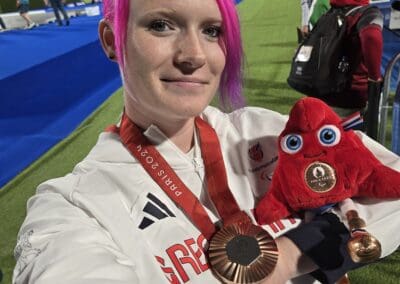
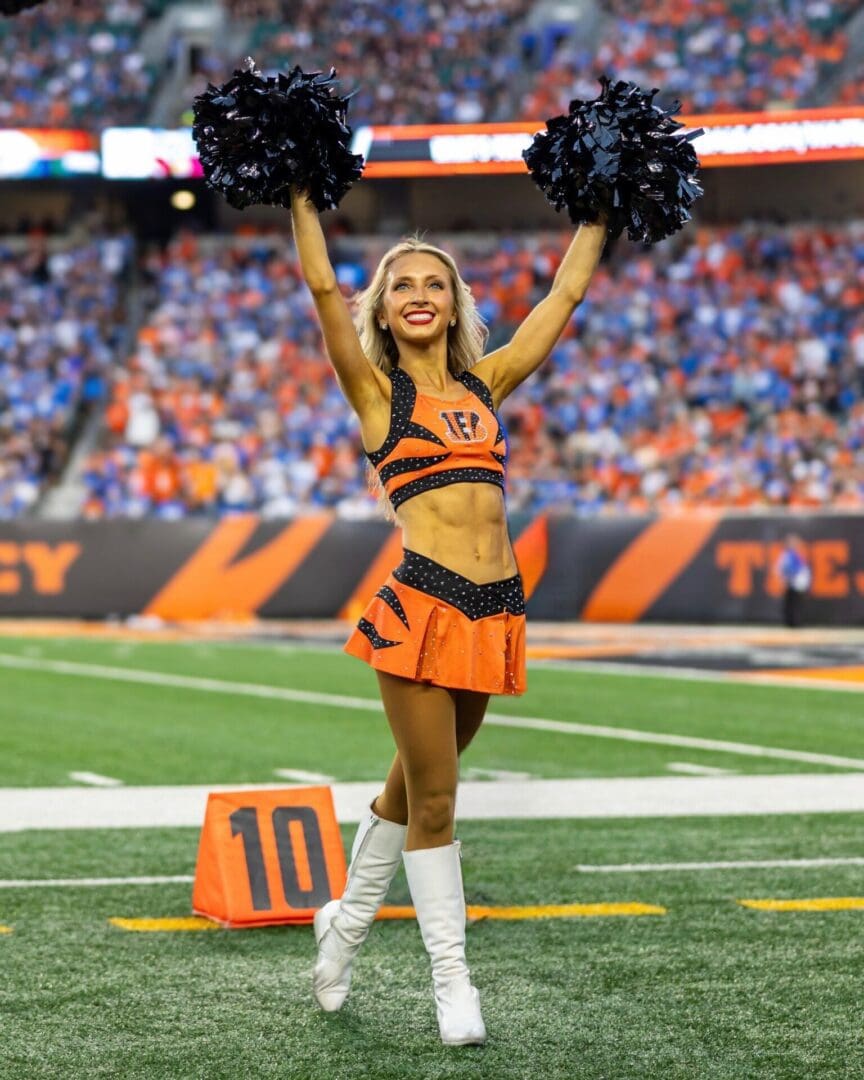
Maris Gooch, 20, grew up longing to be a stunt cheerleader but an unexpected injury during her freshman year of college made her wonder if all her dreams were lost.
“I thought, there’s no way I’m gonna come back from this,” Gooch says. “Everyone else has already excelled, and I’m still behind. I didn’t think that I would even become a pro athlete.
“My mom was a cheerleader. She was the captain of the high school that I went to, so I followed her footsteps, and I became the captain of the same school. We took it very seriously; we practiced every day after school. We even did extra tumbling classes after practice. It continued to be very professional because I got recruited for the University of Cincinnati.
“There were only eight spots on the squad and only two freshmen were invited to the camp. I was training so hard to get a place on the team. I was under fueled, and my bones were not as strong as they should be. I was hyper fixated on food and working out; it wasn’t sustainable for a D1 athlete. I was clearly malnourished.
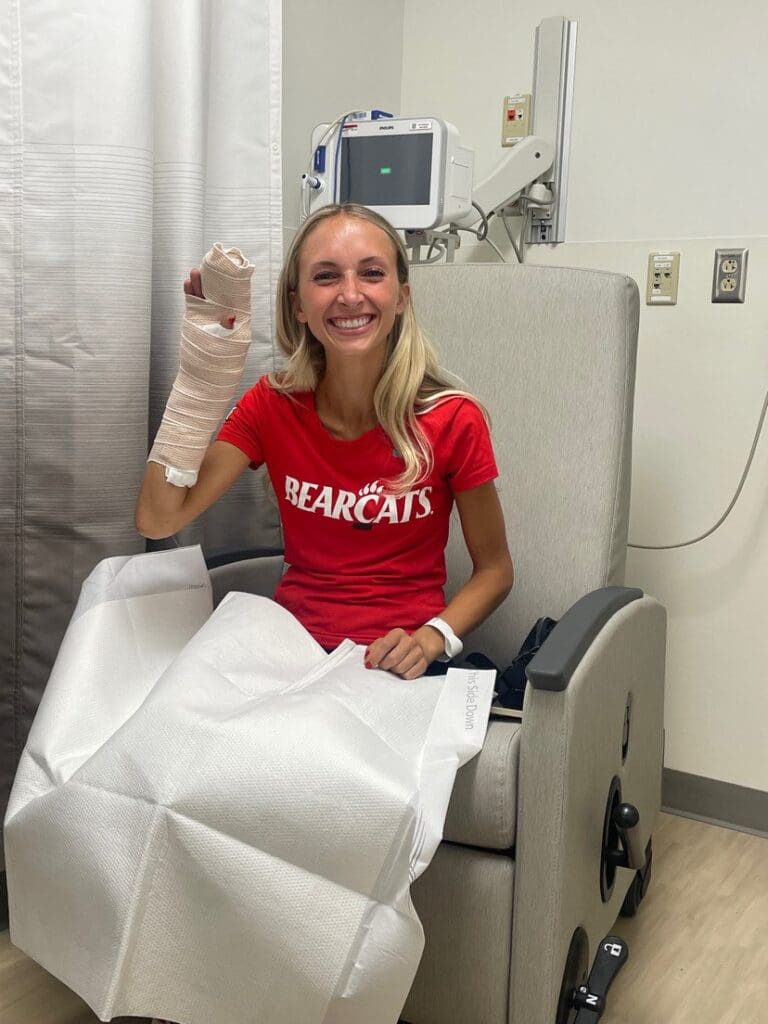
“When warming up for practice, I did an easy standing back handspring tuck. I heard my hand break like a chicken bone. I got up and it was dangling.
“My goal my whole life was to compete at nationals for university. But, clearly that took a different turn. I broke my hand the week before tryouts. I went to the emergency room that night to stabilize it because it was just flopping everywhere, and then I had surgery that same week. I was in the hospital that week, and a month later, I had another surgery. I was out for seven months and had three surgeries: one to put in a screw, one to take out a screw, and then one to fix up scar tissue because my surgeon messed up.
“I completely lost all of my skills and the doctors told me that I might not ever get the same movement back to be able to cheer, and I would need another scar tissue surgery if I wanted to cheer again. So that definitely made me lose some hope. I was coming to practice physically, but mentally, I wasn’t really there. I was just watching everyone else do what I loved. I was hopeless. I didn’t think that it would ever be the same, mentally and physically. I was contemplating quitting every day.
“That’s when I started trying to dance again. It was nice that I didn’t have to tumble or use my hand. Dance got me back into a positive headspace.
“I was taking beginner classes and reaching out to some girls on Instagram that were on the NFL cheer teams, and they suggested going to clinics (workshops for audition preparation), so I signed up for every single one and showed up with no experience. In that first clinic, I met the girls and the coaches and immediately felt like, oh, my gosh, this is the place I’m meant to be.
“I was only 19 and everyone else was around 25 or older. You had to be 20 by the first game to be on the team. The first game was September 14th and my 20th birthday was September 10th. It was pure luck.
“I hadn’t thought about dancing again since I stopped when I was 13 because I had transitioned to stunt cheer. I thought stunting and tumbling was going to be my thing and I wasn’t going to dance ever again. My injury completely changed my whole life. I guess it really was all part of the plan.”
“I completely lost all of my skills and the doctors told me that I might not ever get the same movement back to be able to cheer, and I would need another scar tissue surgery if I wanted to cheer again. So that definitely made me lose some hope. I was coming to practice physically, but mentally, I wasn’t really there. I was just watching everyone else do what I loved. I was hopeless. I didn’t think that it would ever be the same, mentally and physically. I was contemplating quitting every day.
“That’s when I started trying to dance again. It was nice that I didn’t have to tumble or use my hand. Dance got me back into a positive headspace.
“I was taking beginner classes and reaching out to some girls on Instagram that were on the NFL cheer teams, and they suggested going to clinics (workshops for audition preparation), so I signed up for every single one and showed up with no experience. In that first clinic, I met the girls and the coaches and immediately felt like, oh, my gosh, this is the place I’m meant to be.
“I was only 19 and everyone else was around 25 or older. You had to be 20 by the first game to be on the team. The first game was September 14th and my 20th birthday was September 10th. It was pure luck.
“I hadn’t thought about dancing again since I stopped when I was 13 because I had transitioned to stunt cheer. I thought stunting and tumbling was going to be my thing and I wasn’t going to dance ever again. My injury completely changed my whole life. I guess it really was all part of the plan.”
Proving the doctors wrong: Tyler’s story
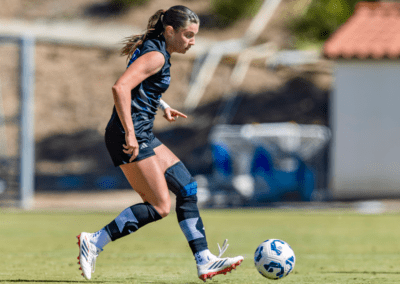
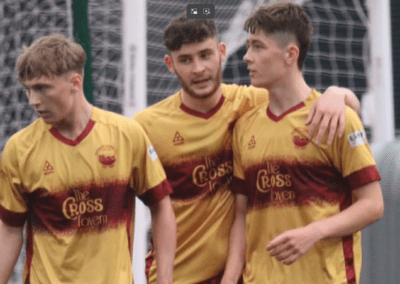
Tyler Beck, 23, from Stockport played youth football alongside Kobbie Mainoo and Phil Foden until injury struck.
“I was told I’d never play football again,” Beck says. “I thought about just packing it in altogether, but I had no plan B. All I thought I was going to be was a footballer. I started playing when I was about 13 and I signed for Rochdale. I stayed there until I was 17 and that’s when I experienced my first major injury.
“I was in a game against Leyton Orient. I stepped back and I did my ACL.
“I had my operation and went through the year-long rehab process. In the first six weeks, I couldn’t move, I couldn’t stand up, I couldn’t walk. When I got the stitches out I went to stand up and I just fell over because there was no muscle in my leg.
“Rochdale actually told me that I would never get paid to play football again because my injury was so bad. I was thinking about just packing it all in together but I always said, plan B is to try plan A again. So, that’s why I kept on my recovery, kept on my rehab and then eventually got back to playing.
“I signed for Workington at 21 which was my second proper contract at a good level. Then, I fractured my ankle at training. The hospital said, ‘It’s just a small fracture, rest for six weeks and you’ll be fine,’ but then we had big games, and we’re supposed to be playing Macclesfield. I wanted to play that game and the club said they needed me, so they kept pushing me.
“In training for the Macclesfield game I went for a tackle, went over my ankle again, and it snapped completely. It wasn’t ready. It was taped up but it didn’t matter. It was broken in two places. The doctors said the bone will be fine in six weeks but the ligaments will not. They said I might need to have an operation.
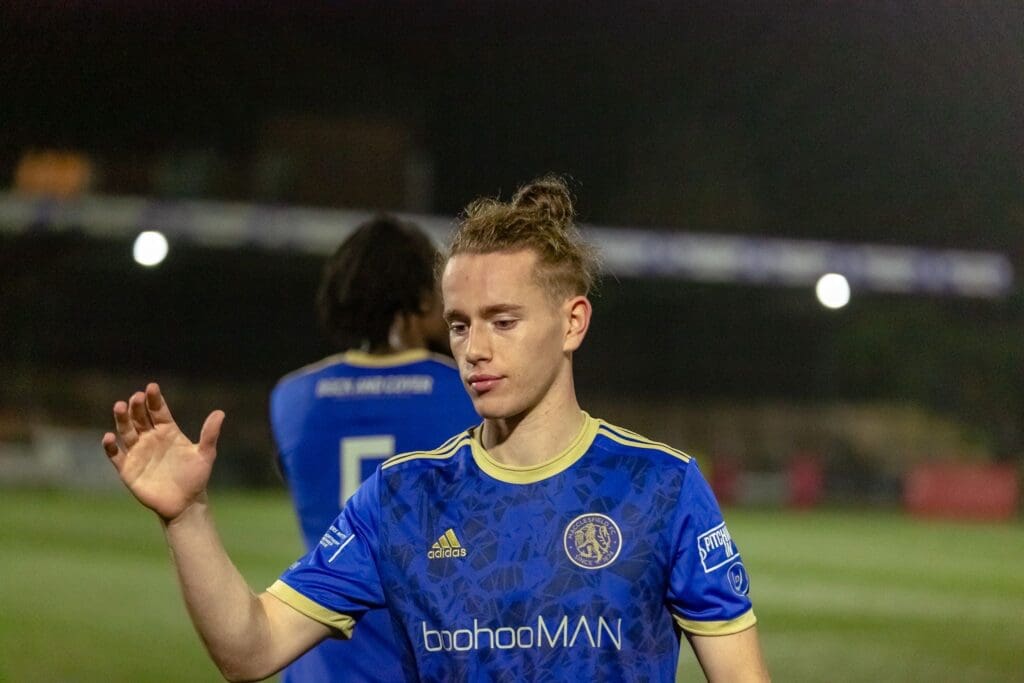
“The club assessed me again after the hospital, and they said, ‘You’re done for the season’. This was in October. It was really early in the season for the club I’d just signed for, and now I was out. It was so frustrating.
“I thought I had finally got myself in a good position. I was playing well, and signed for a new club. It was a good contract, I even got a new car. I was thinking this is it, now I’ll crack on and then hopefully I can get back to where I should have been before my ACL injury. But then I broke my ankle. I was having no luck.
“It was hard not to feel low moods sometimes. There were times in rehab where I sat there and I had a machine on my knee and all I’d do was lift my leg up and down. The machine was right in front of a big glass window that looked out onto the pitch. I was stuck inside and everyone else was running around, having fun, playing football, doing what they love. It was all I wanted to do.
“Football is full of ups and downs. There are loads of setbacks, so you have to be mentally strong. I’m 23 now and proud I’m still playing. I was told I’d never get paid to play football. I’ve proved them wrong. It’s not my full-time job at the moment, but playing semi-pro is the best side hustle ever, if you want to call it that. Sometimes in life, you can’t be too fussy, you’ve just gotta crack on.”
Beck isn’t the only athlete who had to pivot when his body failed him. Across the Atlantic, Gbemiga Adeboye was facing a similar crisis.
For the love of the game: Gbemiga’s story
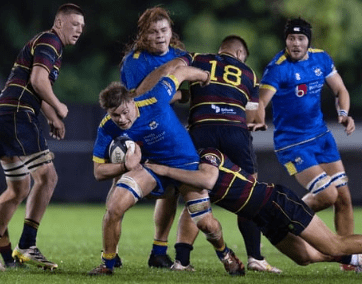
Gbemiga Adeboye, 21, found his love for rugby after moving from Nigeria to England aged 13, but a sudden injury made him question whether it was time to put the boots down.
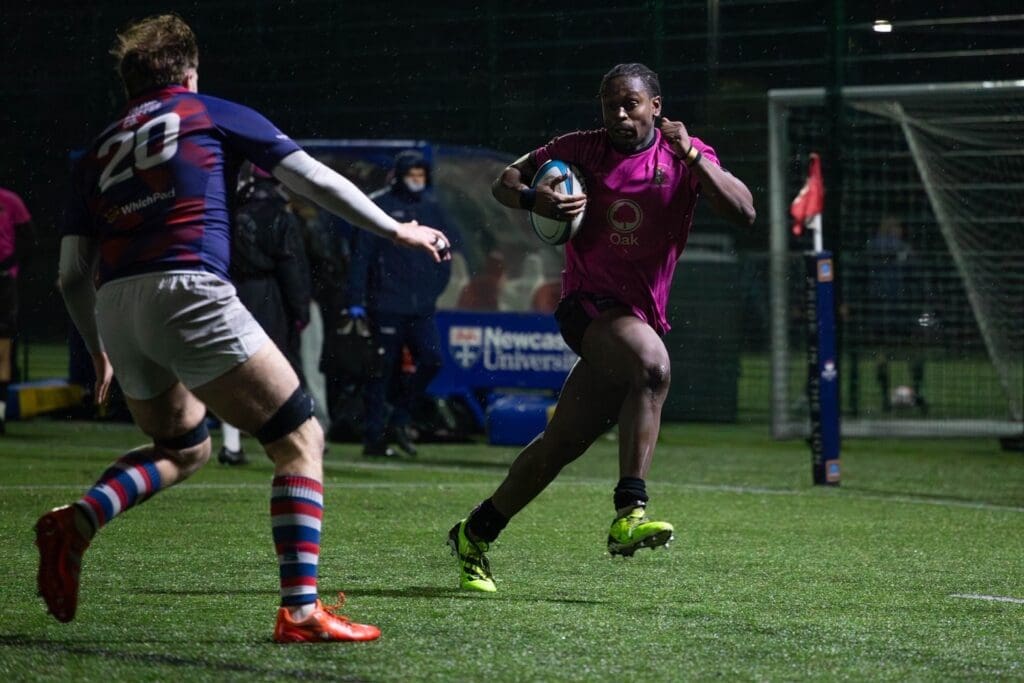
“I had this whole plan in my head of how my career was going to go,” Adeboye says. “It was gonna change my life. And then I had to take that step back. I had to rethink everything. I put all my eggs in one basket.
“I started rugby late, so I had to start from the bottom, but I enjoyed the pressure of it. After my first game at Millfield School, I scored a hat-trick and that gave me the confidence to keep going. I was speaking to a few coaches from America and then I got a scholarship for St. Bonaventure University.
“In my first game – freshman year – I was the heaviest I’ve ever been. I’d never worked at that weight before. I took a normal tackle, landed, and thought I fractured my wrist so I just taped it, but I was in physio for three days in pain and agony, so it was time to go to hospital.
“They did an X-ray and the doctor said it was an emergency level injury. I’d snapped my wrist and all the bones and ligaments were ruptured. I didn’t know how to tell my parents. They paid for me to come across the world and I was missing the whole season because I got injured. I ended up not telling them until two days after the operation. On my dad’s side they’re quite traditional. My grandma said, ‘Do you know what your dad has done for you to come to America and now you’re injured? You better just focus on your academics now and stop playing that silly sport.’
“I hoped it wasn’t as bad as I thought, but it was worse. I had four pins in my wrist and stitches everywhere. I needed so many painkillers because I couldn’t sleep, I couldn’t function. My wrist was in the back of my head all the time. I knew I wouldn’t be able to play any games and I’d have to prove myself again next year all over again.
“Without rugby, I realised I just wasn’t happy in America so I decided to move back to England. I’m still playing at a decent level, but I don’t see it going as far as I originally wanted it to. Now I’m just going to play it for the love of the game.
“When I was younger I thought the only thing I was good at was rugby, but now I see I can have success outside of it. The doctors told me my wrist won’t be able to be as flexible as it was before. They said I wouldn’t be able to carry as much weight as before which is a lie.
“I’m stronger than I was then.”