Former footballer Franz Carr enjoyed a successful career, but behind the highlights his injuries were ever-present. In the ruthless 1990s football culture, this feature explores what life in permanent recovery was really like.
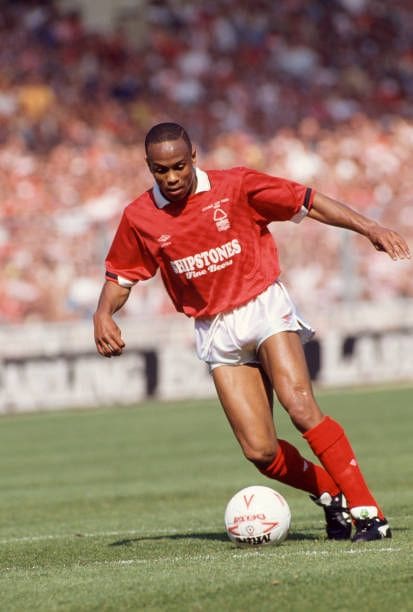
It’s April 1990. Wembley Stadium. Nottingham Forest are moments away from victory in the Football League Cup final. On the right wing, Franz Carr explodes down the line as they secure their winning goal against Oldham Athletic.
Forest fans roar, beers fly, the noise is deafening. But Franz is quickly distracted; his hamstring tightens mid-stride, a familiar pull that cuts through the adrenaline. He knows the feeling instantly, it’s followed him for seasons now.
This wasn’t a new or one-off injury. By this point, Franz was in a continuous state of recovery; battling hamstring issues from the early days of his career, he rarely had the opportunity to complete a proper cycle of rest and treatment before being driven back onto the pitch.
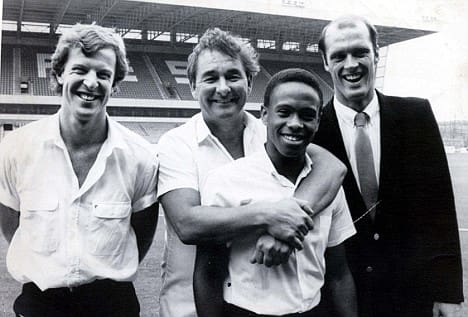
At the time, he was one of the fastest wingers in English football, playing under Brian Clough at a top club.
Fresh on the scene
Breaking onto the professional football scene at just 18, Franz felt invincible.
“Anything was possible before the injury,” he says.
“When you’re young I’d say you’re a bit naive because you trust people. Whoever you speak to, you get advice off and even with little injuries, you put your trust in the physios and the medical team.”
It wasn’t long into his career at Nottingham Forest that the first hamstring problem appeared, and crucially, never fully went away.
“When I first did my hamstring, I came back too quick. I didn’t realise exactly how to manage it,” says Franz.
During this era of football, players were expected to accept the timelines they were given and above all else, remain available. Long term recovery management was rarely part of the conversation.
Back then, a three-to-four week recovery period was standard, but without our modern understanding of muscle rehabilitation, that often meant returning before the hamstring was properly healed. In the years that followed for Franz, it was a repetitive loop of strain, return, and re-injury that would define much of his career.
Quick fixes
In line with medical practices at the time, Nottingham Forest physiotherapists prioritised short term solutions for Franz over prolonged rest.
“I had cortisone injections in my hamstrings. I had three in one and three in another in a short period of time at the club.
“It was a quick fix basically to get out there. It feels good when you’re actually playing,” says Franz.
In the 1980s and 90s, this approach was common. Cortisone injections were widely used, seen as a practical solution within the limits of sports science at the time. The aim was simple: reduce pain and get the player back on the pitch.
“If you were to take an injury and do nothing else but inject it, you’ve got a much higher chance of failure because you’re not treating the underlying problem,” says Anthony Wilkinson, a Consultant Podiatric Surgeon.
Mr Wilkinson, an expert in using cortisone injections to treat athletes, explained that the initial dose of cortisone is administered alongside a local anaesthetic, which provides an immediate pain relief, enabling athletes to continue performing.
“The player is not feeling the pain that the body would normally give them, but they still have the injury,” Mr Wilkinson says.
This can be detrimental though, as suddenly dampening prolonged pain can give athletes a false sense of safety, encouraging them to push their injury to its limits and causing further damage.
However, this practice extended beyond Franz and his club. “In my day, all the older players went through hell with the injections and things like that,” he says.
What felt like recovery was only temporary, quietly feeding this constant cycle of recovery.
No room for injury
The reliance on quick fixes was not just medical, but a part of football culture too.
Although modern football squads are larger and have many substitutes, the game looked very different at the height of Franz’s career. Matchday squads were much smaller, with managers relying on a core group of players to get through a demanding schedule. Therefore the margin for absence was thin, placing more pressure on the quick return of injured players.
“A manager will say, well when am I going to have him back? When are you going to be playing again? Nobody’s any good to you when you’re injured. That’s what it used to be at Forest,” Franz says.
This view was upheld around his teammates and other coaching staff too.
“If you’re injured, then you’re like an outcast, like a leper. They only want to know you when you’re back fit playing and training on the fields,” he says.
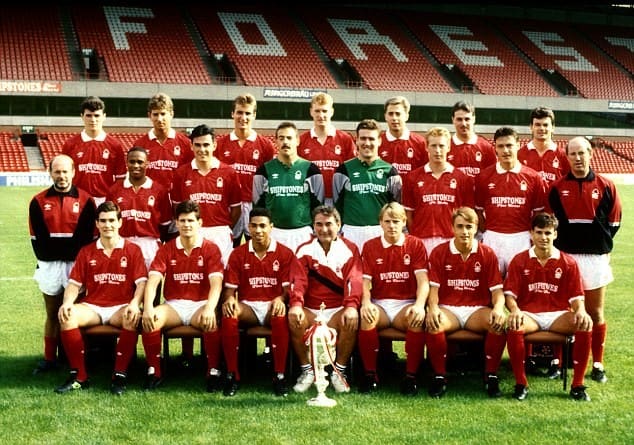
At Nottingham Forest, under Brian Clough, that expectation was clear and often unpromising. As Franz recalls: “It doesn’t matter how they get back on, as long as they’re on, that’s it.”
In that environment, playing through pain wasn’t exceptional – it was expected.
Never fully fit
Every sprint carried risk and Franz was constantly reminded of that.
“There’s certain times where I’d think, can I get that ball? Knowing that my hamstring might go,” he says.
Franz made a quiet adjustment, one that may not have been noticeable from the stands or to the opposition.
“I played at only 80-85% of my maximum speed for a long time, but because I was quick anyway, my reduced speed was still quicker than most. I was blessed in that way.”
Every movement became a calculation between self-preservation and high performance. For a large part of Franz’s career, survival on the pitch simply meant knowing how much to hold back.
The price to pay
There was little sense that these ‘quick fix’ methods might carry long term consequences. The priority was always the next match, not the years that followed. But for Franz, the impact of repeated cortisone use would outlast his playing career.
Modern understanding paints a far more cautious picture. “Repeated injections would be considered poor practice today,” says Mr Wilkinson.
What was intended to reduce pain and speed up recovery instead contributed to the problem.
“When you repeatedly inject something you will cause damage, and it can cause what’s known as dystrophic calcification. This is where the body lays down calcium deposits, in reaction to the steroid that’s been injected, which is a foreign material,” Mr Wilkinson says.
Cortisone itself is not inherently harmful, but its effectiveness depends on how it is used.
“It’s a very useful drug, but it does have significant risks if not used appropriately and should only be used with caution within a fully scheduled rehab programme,” he says.
In Franz’s case, that balance was missing. He still lives with the consequences. While the cortisone itself was not directly harmful, repeated injections led to hardened lumps in his hamstring, meaning he can no longer run due to fear of triggering a hamstring tear again.
“You put your faith in the club and the medical staff and you’re guided by them. Looking back, could I have done it differently? Not really because the medical treatments that were available to me weren’t any different to any other club at the time,” says Franz.
His experience reflects a wider reality of the era; players operated within a system that prioritised availability over longevity, with limited medical knowledge of how to correctly manage recurring muscular injuries.
Worth it in the end?
“There were a lot of dark times, but I’m old school, you just get on with it.
“When I look back at it now I think, bloody hell, did I actually play?” Franz says when reflecting on his career spanning 16 years.
From the roar of Wembley, to daily training, and time in the treatment room, he counts himself fortunate.
“It’s a privilege and an honour just to be a footballer. I’m thankful that I got to play against some of the best, and obviously be under the best manager, Brian Clough. It was a love-hate relationship, but at the same time I have a lot of fond memories,” he says.
In the end, his injuries were just a backdrop to a career full of speed, skill, and triumphs on the pitch.
SIDEBAR
Cortisone explained
Cortisone is a synthetic steroid hormone used to treat inflammation, usually administered through injections to a localised area, such as a painful joint or tendon.
Ricardo Pacheco, Orthopaedic Surgeon and Cortisone Specialist, has worked with many high performance athletes to provide cortisone injections.
“It suppresses inflammation by altering the production of the inflammatory mediators that the body produces.
“As a result of this, people will notice less swelling, less heat in the area, and less redness,” he says.
Between 24 to 72 hours after the injection is given, the cortisone kicks in, with its effects lasting weeks or months depending on the person.
Mr Pacheco recognises that the usage of cortisone injections often looks different in athletes than it does for regular patients.
“Athletes are a completely different breed to everybody else. They just want to get back to doing whatever they want to do, mostly using it around competition to keep going.
“Also, the effects of the steroids – the pain relief, the reduction of the inflammation – help with the rehabilitation of an injury.”
Cortisone injections should not be used as the singular treatment for an injury.
“They have to be part of a treatment plan,” Mr Pacheco says.
“They are not a healing substance; they are an addition to your rehabilitation.”
It is still expected that athletes would use other recovery methods such as physiotherapy, rest, and cryotherapy alongside this.