What happens when your body stops doing the one thing that defines you? Former England Sevens captain Ollie Phillips lived for his place on the pitch, until an unexpected injury took it all away. In this intimate profile, one of the biggest names in rugby opens up about the absence of his athletic identity and journey to rebuild a life beyond the tryline.
Early mornings and the roar of rugby stadiums are far from Ollie Phillips’ reality in 2026.
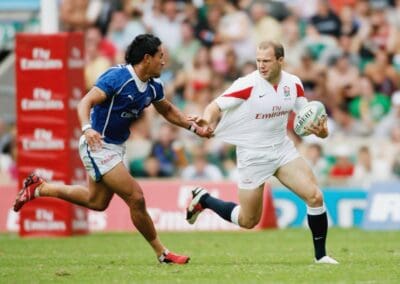
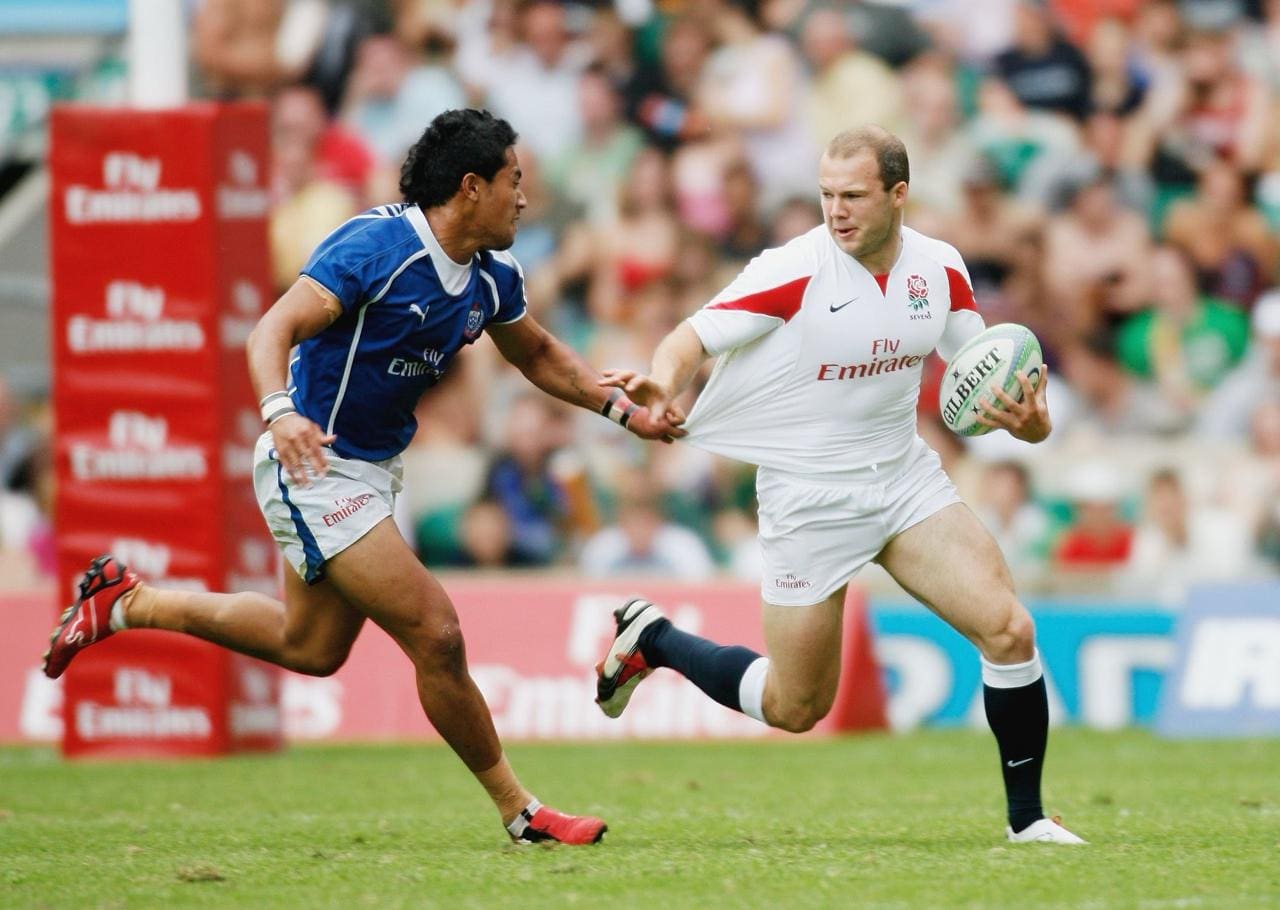
For more than a decade, rugby shaped the rhythm of Phillips’ life. As captain of England Rugby Sevens for six years and crowned the World Sevens Player of the Year in 2009, his identity was built around rugby, which consumed most of his life.
Yet in 2013, a sudden injury forced Phillips to confront a reality that many elite athletes fear: what happens when the game is forced to end before you’re ready?
Behind the jersey
The nature of elite sport rarely allows room for multiple identities. Years of training, competition and public attention can shape how athletes perceive themselves, and how others perceive them.
“When I was younger, I always said I was going to play for England, but I didn’t believe that; it was always just fun,” says Phillips.
“Then when I got to about 16 it started to get serious, and I had representative honours interested and bigger clubs started to look at me.
“It was at that point I aspired to be a professional player.”
As his career progressed, the milestones came quickly: professional contracts, international appearances, playing for Newcastle Falcons and the Harlequins – teams that Phillips had always admired.
“I’ve watched them on telly for the last four years and now I’m playing with them,” he says. “Then England came calling and you’re like wow, I’m really good at this!”
With that success came recognition, attention, and validation.
“The confidence you get flatters your ego massively.”
“80,000 people at Twickenham come to watch you. So many people read and write about you in newspapers, talk about you on TV, it builds momentum. Suddenly you’re the rugby player,” Phillips says.
That identity, once formed, can be difficult to replace.
The beginning of the end
“My intentions were to go to the Rio 2016 Olympics,” he says. “That was always the plan and then I was going to retire, and I knew that would be the end of that chapter.”
“I had been given the pathway. I was going to be captain for Great Britain at the Olympics, and that was going to be the finale of it all.”
Instead, a serious nerve injury in his calf – one that risked causing neural damage in his back if he continued playing – abruptly ruined the career finale he had always imagined.
“It went from here’s the next three years of your life planned out…to nothing; all within the space of five hours,” he says.
Invisible aftershock
Despite the blow of initial injury diagnosis, Phillips didn’t immediately confront the reality of retirement. Instead, an unexpected opportunity arrived that delayed that process entirely.
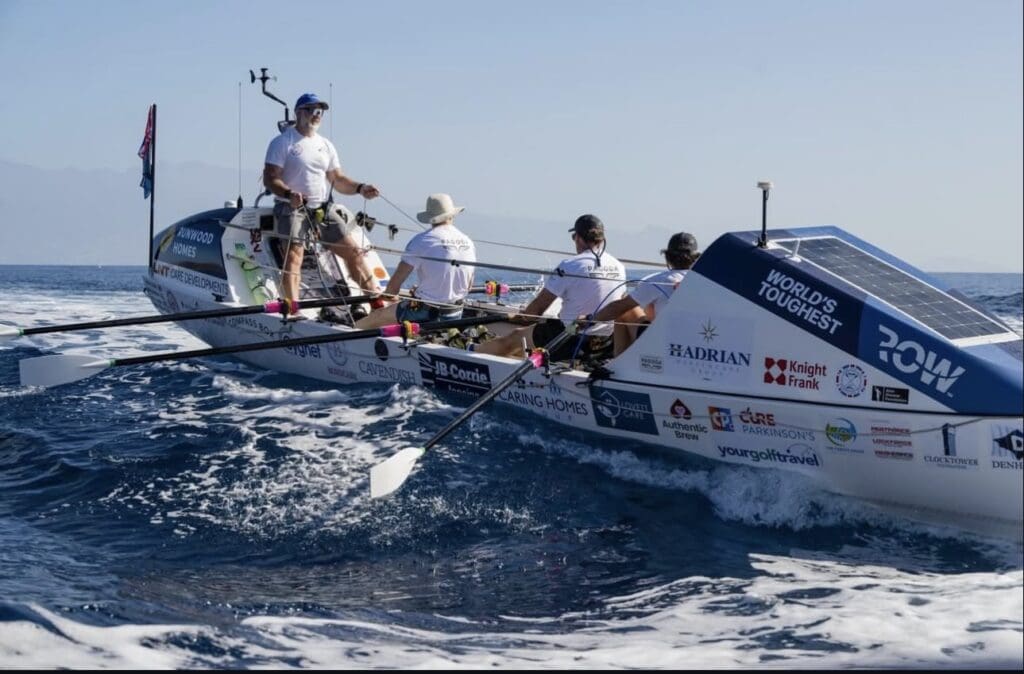
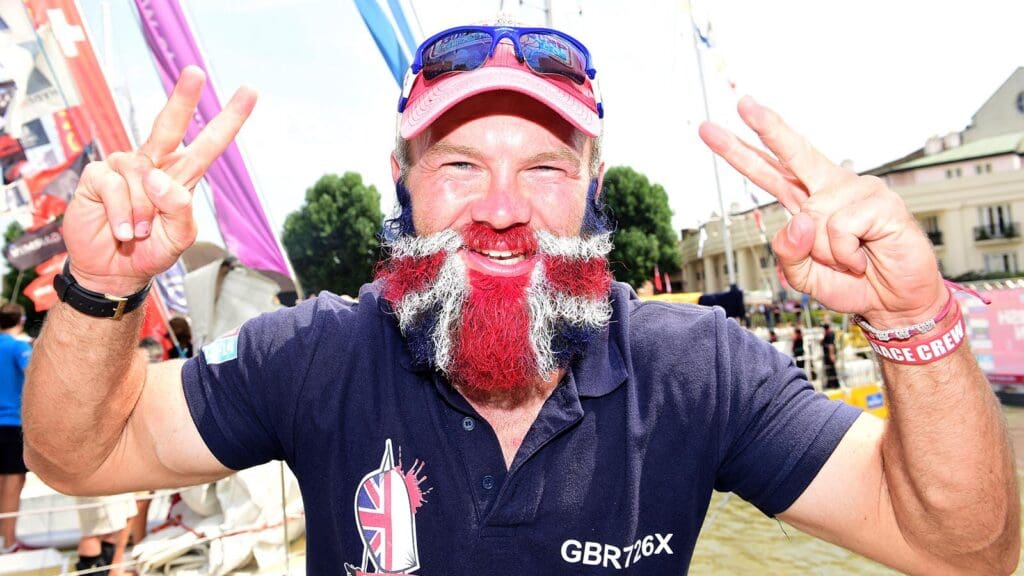
On the night of his injury, Phillips was contacted by a friend who had founded the Clipper Round the World Yacht Race – an 11-month sailing challenge spanning more than 46,000 miles.
Five weeks later, Phillips was on board the Great Britain boat as a trade envoy for the British government, setting sail around the world.
“I didn’t really address my injury or the psychology behind it,” he says.
“I believed I would be able to play in a couple of years, despite what I had been told.
“I had this dream: my first port of call on the Clipper race was Rio and then my last port of call would be Rio from a playing perspective. It felt full circle,” Phillips says.
While this experience filled the immediate void left by rugby, it also postponed the deeper emotional impact of retirement.
“I came back from a year sailing around the world and tried to play; turns out I couldn’t.”
The reality became unavoidable: his body could no longer perform at the level required.
“That was the final nail in the coffin,” he says.
Navigating the void
However, during the yacht race Phillips was presented with an unexpected opportunity when he met a senior partner from PwC – a multinational professional services network – who offered him a role within the company.
“I’ve never met anyone that leads a team, the way you lead a team,” he recalls. “You have to come and work for us.”
“I knew I needed a job, no clue what the company does, but great I’ll come and work for you,” Phillips says.
“He offered me a role as a director to lead the digital transformation business for the company.”
But before that, Phillips took off on another adventure, setting a Guinness World Record at the North Pole for the Most Northerly Rugby Match, delaying his employment at PwC.
When Phillips eventually joined PwC, it was two years post-retirement when his loss started to impact him, and despite the professional success that followed in his employment, the transition was not simple.
“I realised it’s final; my rugby career is over,” he says.
“I was in a senior role, I interacted with lots of people, I ran quite a big team. Lots of people were coming to me for answers and I would introduce myself by saying: ‘Hi I’m Ollie, I used to play rugby.’ That was still who I identified as.”
The contrast between elite sport and corporate life also created a sense of uncertainty. Phillips remembers not even knowing what he was doing.
“I was highly skilled as a rugby player; I was not highly skilled at being a director.”
“I really struggled for identity, purpose and focus,” he says. “I was in the top one percent in the world of people that execute and play rugby, but at PwC I was not. I felt a lot of imposter syndrome.”
Finding closure
In a surprising turn of events, Phillips finally found peace with the end of his athletic career through an opportunity at the University of Cambridge.
“I got the opportunity to study an MBA at Cambridge and thought:I needed to educate myself, and fast, in business so this is great.”
While studying, Phillips was invited to play in the annual varsity rugby match for the university.
Despite not having played professionally for years, he accepted the challenge.
“I ended up playing the varsity match at the age of 37. I think I’m the oldest player that ever did!” Phillips recalls.
“When I came off the pitch there were students, friends and family, and they were all laughing saying they ‘didn’t realise that they let professors take part in the varsity match these days’. That really hit me, cut me deep!”
Before the match, Phillips says there had always been a lingering sense that his career ended abruptly, like an unfinished chapter.
“I knew it was time to call it a day,” he says. “That was the closure I needed in my career. In that interim period from joining PwC to that moment, I internally struggled with my identity and keeping focused.”
“There was always this hole,” Phillips says. “The feeling of ‘I wish this were different,’ but after that game, I got comfortable about the fact that being a rugby player doesn’t define me anymore and I did, sort of, move on!”
Looking back with perspective
Now in his forties, Phillips reflects on his rugby career with gratitude rather than frustration.
“I love the game,” he says. “I am so grateful to it, and I have always been a fan, but during those years I struggled to be a fan because I desperately wanted to play.”
“Once I played the varsity match, I accepted I was never going to return to the game and ultimately fell back in love with it.”
In hindsight, the injury that once seemed devastating also opened doors that might otherwise never have existed.
“You can’t know what would have happened if things had gone differently.”
“I was obviously very disappointed I would never be able to play again, but in hindsight my life turned out in a pretty good way,” he says.