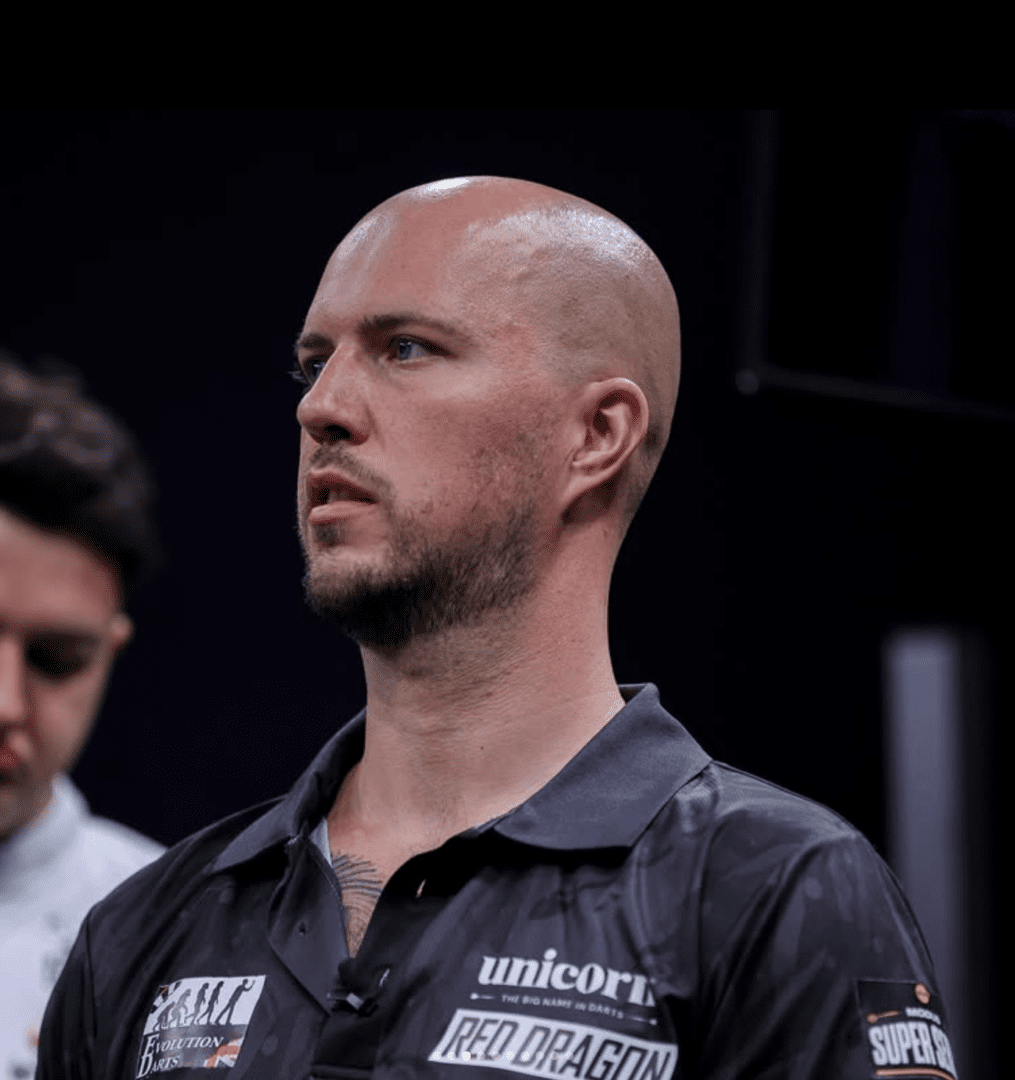
For most darts players, their throw is a matter of repetition. Step up to the oche, lock eyes with the target, draw back and release. It’s a motion refined over hundreds of hours of practice. But for Jack Langston, that instinct vanished.
What began as a subtle hesitation soon became a breakdown between mind and body. For years, Jack battled a problem he couldn’t name; questioning his technique, his mentality, and his place in the sport. It wasn’t until someone finally put a word to it – ‘dartitis’ – that the struggle gained definition. But by then, the damage had already been done.
Known to many as ‘The Darts Referee’ on social media, Jack’s journey back to the dartboard was far from easy. It didn’t follow the traditional path of recovery, rest, or minor technical tweaks. Instead, it required something far more radical: starting again from the opposite side of the body. Switching hands meant more than learning to throw with his weaker arm, it meant retraining his brain, rebuilding his vision, and dismantling years of ingrained muscle memory that had turned against him.
This is a story about recovery from not just a physical condition, but from the mental paralysis of losing confidence in something once second nature.
The invisible wall
“I think I was about 11 or 12 years old,” Jack says. “I played in this pairs match, and I just couldn’t get the darts out of my hand…it was taking me a minute to throw three darts.”
At the time, there was no explanation. What looked like nerves or a strange habit was actually the first sign of a condition that disrupts the brain’s ability to send a clear signal to release the dart.
“I remember just not understanding what was going on, and it was really annoying because I just wanted to play darts all the time when I was a kid.”
“It wasn’t until maybe four years later that someone actually had a name for it,” Jack says.
“That’s when someone said, ‘oh yeah Eric Bristow had that’… so it’s not just a me thing.”
Dartitis is a psychological condition that disrupts a player’s ability to release the dart, freezing the moment it should be automatic. It is described as a mental block and has affected players at all levels. Most notably, five-time world champion Eric Bristow, who suffered a public struggle with the condition in the later part of his career.
A radical reset
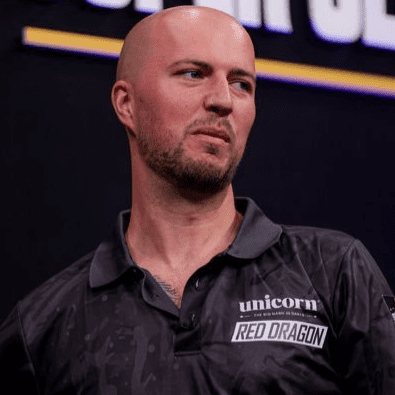
By the time Jack seriously considered switching hands, it didn’t feel like a bold experiment. It felt like a final resort.
“Sometimes it [dartitis] would last three months, sometimes it would last for three years – it was so on and off,” he says.
Three years before the switch, things appeared stable. He was playing right-handed without symptoms, performing well, and carrying on as normal. Then slowly the problem crept back in. Filming a casual ‘chuck and chat’ video with his friend Ashley Coleman, Jack wasn’t focused on the performance. But when the cameras stopped rolling, the numbers told a different story.
“Ash averaged 80. I averaged 36. I didn’t throw a single dart at a double,” Jack says.
The realisation was blunt: Jack could likely play better with his ‘bad’ hand than his ‘good’ one. “Simply put, my options were to swap hands or quit.”
The day after filming with Ash, he picked up the darts with his left hand and recorded himself throwing for 20 minutes. Even now, he’s surprised when he looks back. “I’m actually not awful,” he says. “I don’t look like someone who’s never played darts before.”
Night after night, he streamed for two or three hours, chasing fluency and confidence. “It took me 30 days to hit my first left-handed 180 and I haven’t looked back since,” he says.
Switching hands wasn’t a cure for dartitis in the traditional sense. It was a reset of muscle memory, expectations and identity. By choosing to start from scratch, Jack found a way to move forwards.
Relearning the game
The physical reality of switching hands was even more unfamiliar than the idea itself. Darts is a game of millimetres, repetition and deeply ingrained habits, and changing the throwing arm disrupts almost every physical reference point a player has. Though for Jack, the physical challenge arrived with an unexpected advantage.
“I’ve always been left-eye dominant,” he says. “My eyesight in my right eye is so poor that I don’t actually have much depth perception. So when I first started throwing left-handed, I was like…I can actually see what I’m doing.”
The shift alone was disorientating. For the first time, the dart was being brought up under his dominant eye – The one that worked. Where the right-handed throw had gradually become clouded by visual uncertainty and hesitation, the left-handed motion felt oddly clearer.
“That kind of gave me a bit of belief; maybe there is something to this.”
“The hardest part of swapping hands was leaning on my left leg instead of my right. My left knee was in absolute bits for about two months.”
Darts may look static, but the throw begins from the ground up. Balance, weight transfer and stability through the front leg are fundamental, and Jack had spent decades loading his right. Suddenly asking his body to reverse that pattern placed stress on joints and muscles that simply weren’t conditioned for it.
“The only part that’s changed is the arm,” Jack says. “I knew how to count before, I know how to count now. I know what good technique looks like. I knew what darts and flights I liked. I already knew 90% of the game – I just didn’t know what to do with my left hand.”
Switching hands was, in effect, a process of neurological retraining. Over time, what felt alien became automatic.
Finding a way forward
After living with the condition on and off for 18 years, Jack still refuses to pretend he understands it.
“I’m not a psychologist. I don’t understand what was going on in my brain,” he says. “The whole time I had dartitis, I’ve never really understood it.”
“If you swap hands, just understand that you’re not going to be good. That’s number one,” he says. “Accept you’re going to be poor to start with.”
Two years into throwing left-handed, the uncertainty has softened into something else. “I don’t feel like I ever didn’t play left-handed now. It feels so natural.”
“I’m probably better now than I ever was right-handed.”
With a social media following of over 165,000, Jack has inadvertently become a beacon for players suffering in silence. Professionals and amateurs alike now reach out for guidance on how to navigate the mental fog of the game.
“I don’t really know what I’m doing myself, but just do what you think you need to do, and it’ll probably be the correct answer,” Jack says.
For a condition defined by uncertainty, that may be as close to clarity as darts ever allows.